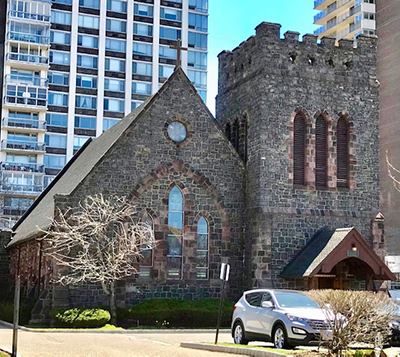
Sermon 9/14/2025 By Rev. Juhyung Choi

The Lost Sheep, the Found Sinner 

O God, because without you we are not able to please you, mercifully grant that your Holy Spirit may in all things direct and rule our hearts; through Jesus Christ our Lord, who lives and reigns with you and the Holy Spirit, one God, now and for ever. Amen. 

The Collect for today expresses the heart of the gospel reading: God is the Good Shepherd who seeks the lost, who leads us with love and patience, who forgives us and brings us to the feast of joy. All of us know the experience of losing and finding something precious. A child feels relief when a lost toy is found. Families rejoice when they meet a loved one after many years. Even finding a misplaced item can bring freedom and peace. These moments are not only about the object itself, but about the restoration of relationship, the return of stability, the confirmation that what was lost still matters. 

Today’s gospel reveals this truth in our relationship with God. The difference is this: we are not the ones searching. God is the one who seeks. And what is lost is not an object, but our very lives. 

Luke 15 shows that Jesus’ actions shocked his society. Tax collectors and sinners gathered to hear him, but the Pharisees and scribes complained: 

“This fellow welcomes sinners and eats with them.” (Luke 15:2) 

In the world of Jesus, a shared meal was not just food. It showed who belonged and who did not. To sit at table with sinners was to cross social and religious boundaries. Jesus was not only being kind; he was announcing a new order of God’s kingdom. He showed that God does not divide people into pure and impure, but welcomes all. To explain this, Jesus told the parables of the lost sheep and the lost coin. 

In the first parable, the shepherd leaves ninety-nine sheep in the wilderness to look for the one that is lost. From a human perspective, this seems foolish. Yet in this action, we see God’s love. In Scripture, God is often pictured as a shepherd. Psalm 23 begins, “The Lord is my shepherd, I shall not want.” In Ezekiel 34, God promises, “I myself will search for my sheep… I will bind up the injured, and I will strengthen the weak.” 

When the shepherd finds the lost sheep, he lifts it with joy and carries it home. This shows what true community is. No one is left behind. When even one is missing, the whole body suffers. But when the 

1

one is found, the whole community is strengthened. The ninety-nine also learn that they will never be abandoned. This trust builds unity and hope. To seek even one lost life is not a small gesture; it is the way a community is kept alive. 

The second parable shows the same truth in a different picture. A woman loses one silver coin out of ten. For her, this is not just money but security for her household. Losing one coin threatened her stability. So she lights a lamp and sweeps the house carefully until she finds it. 

This persistence reveals God’s unfailing love. Even if we wander far, God does not give up. God searches every corner until we are restored. And when the coin is found, the woman calls her friends and neighbors to rejoice with her. What was at risk was not only her possession, but her peace and stability. Its recovery restored her sense of security, and her joy could not be contained. 

So too, when God restores one lost life, the whole community rejoices, because everyone is bound together. Psalm 139 gives voice to this truth: 

“If I take the wings of the morning and settle at the farthest limits of the sea, even there your hand shall lead me, and your right hand shall hold me fast.” (Psalm 139:9–10) 

No matter where we go, God’s hand is already holding us. 

Our world today often feels broken. Violence and hatred still tear communities apart. Just last week, many were shaken by the news of a young political leader who was shot and killed at a university in Utah. Regardless of political stance, we grieve the way fear, suspicion, and hostility can erupt into deadly violence. Such tragedies expose the deep divisions and wounds of our time. The prophet Jeremiah once cried out: 

“My people are foolish, they do not know me; they are stupid children, they have no understanding. They are skilled in doing evil, but do not know how to do good.” (Jeremiah 4:22) Jeremiah’s harsh words came from deep sorrow over the blindness of his people. Yet he also saw that even in destruction, God’s steps were still approaching—not to destroy, but to call his people back. Just as parents discipline a child out of love, so God’s judgment is not only punishment but also an invitation to return. Even when the world seems to collapse, God does not abandon us. God comes as the shepherd searching for the lost, as the woman determined to find what is precious. 

At the heart of both parables is repentance and joy. When the shepherd finds his sheep or the woman her coin, they invite neighbors to celebrate. Jesus says: 

“There will be more joy in heaven over one sinner who repents than over ninety-nine righteous 2

persons who need no repentance.” (Luke 15:7) 

God’s joy is not in the ruin of sinners but in their return. The world celebrates success and achievement, but God rejoices in restored life and renewed relationship. Every time we celebrate the Eucharist, we share in this heavenly joy. The table of the Lord is not for the perfect, but for all who turn back in faith. 

The apostle Paul is a clear witness to this grace. Once a persecutor and violent man, he became a servant of the gospel. He called himself “the foremost” of sinners, yet he received mercy so that Christ’s patience could be shown through him (1 Timothy 1:15–16). 

These parables are not only stories from long ago; they are God’s invitation to us today. They call us to restoration. When the lost return, their place in the community is renewed, and the whole body is made complete again. 

They also call the church to go beyond safe walls. The mission of the church is not only to care for those inside, but to seek those left out: the forgotten, the voiceless, the powerless. To embrace them is not optional; it is what makes the church truly the church. 

Finally, these parables invite us to share God’s joy. God rejoices when even one life is restored. When the church welcomes back the lost, it becomes a sign of that joy for the world. 

God’s heart is always turned toward the one who is lost. This persistent love gives life to the whole community. The ninety-nine also gain hope because they know they will never be abandoned. Even when the world seems to fall apart, God still seeks us. When the church becomes a community that searches for the lost and refuses to give up on one another, then it becomes a witness of God’s joy. And in that joy, the world may glimpse the very heart of God. 

Amen. 

3

Sermon 8/24/2025 By Rev. Juhyung Choi

From Fear to Freedom 

Jeremiah 1:4–10; Psalm 71:1–6; Hebrews 12:18–29; Luke 13:10–17 

In life, we cannot avoid moments when we are “called.” Someone might ask us to take on a task. Or a situation might suddenly demand responsibility from us. At such times, we find ourselves standing before a call. 

But when that call is not easy, the first thing that comes is often not joy, but fear. We whisper to ourselves: “Can I really do this? I am not good enough. What if I fail?” 

Today’s four readings begin in places of fear and weakness. Jeremiah hesitated, saying he was only a boy and could not speak. The psalmist confessed trust in God who had been faithful from the womb. Hebrews proclaims a movement from the mountain of fear to the mountain of grace. And in the Gospel, a woman bent over for eighteen years is lifted by Jesus’ touch and begins to praise God. 

Each story stands on its own, yet together they echo one truth: God meets us within weakness and fear; God frees the oppressed and turns despair into new creation. 

“Before I formed you in the womb I knew you, and before you were born I consecrated you; I appointed you a prophet to the nations.” (Jeremiah 1:5) 

Jeremiah was young and inexperienced, so he answered: “Ah, Lord God! Truly I do not know how to speak, for I am only a boy.” (Jeremiah 1:6) 

This short reply reveals fear, helplessness, and the weight of responsibility. We know this feeling. When a larger role appears, we want to step back. 

But God does not leave Jeremiah inside his fear: 

“Do not say, ‘I am only a boy’; for you shall go to all to whom I send you, and you shall speak whatever I command you. Do not be afraid of them, for I am with you to deliver you, says the Lord.” (Jeremiah 1:7–8) 

The call does not rest on Jeremiah’s talent. It rests on God’s presence. Then God touched Jeremiah’s mouth: “Now I have put my words in your mouth.” (Jeremiah 1:9) 

Jeremiah becomes not only a messenger but a vessel that carries God’s word. His mission is weighty: 

“See, today I appoint you over nations and over kingdoms, to pluck up and to pull down, to destroy and to overthrow, to build and to plant.” (Jeremiah 1:10) 

It is tearing down injustice; it is raising new life. We, too, say, “I am not enough. I cannot handle this.” Yet precisely there, within our limits, God’s strength is revealed. 

1

In old age, the psalmist sings: 

“Upon you I have leaned from my birth; it was you who took me from my mother’s womb. My praise is continually of you.” (Psalm 71:6) 

From youth through hardship into gray hair, he testifies that God has held him steady. Calling is not a single decision but a lifelong path. Even when we fall, doubt, or wander, the hand that called us does not let go. 

Jeremiah’s promise, “Before you were born I knew you”, and the psalmist’s confession, “Upon you I have leaned from my birth”, belong together. Faith does not begin only when we choose God; it begins with grace that first chose us. 

So discipleship becomes a long learning of God’s faithfulness. 

Hebrews shows where this calling leads. It contrasts Mount Sinai and Mount Zion. Mount Sinai thundered with fire, cloud, trumpet, and a terrifying voice . The people trembled at a distance, while only Moses drew near. 

But now: 

“You have come to Mount Zion and to the city of the living God, the heavenly Jerusalem, and to innumerable angels in festal gathering.” (Hebrews 12:22) 

It is a place of celebration, the city where Jesus, mediator of a new covenant, gathers his people. Trembling steps at Sinai become dancing steps at Zion. 

Yet grace is not cheap. It comforts us, but also changes us. God still says: “Yet once more I will shake not only the earth but also the heaven.” (Hebrews 12:26) 

This “shaking” is not meant to terrify, but to clarify. What is false and hollow falls away. What is true remains. 

It is purification, not ruin, until only the “kingdom that cannot be shaken” endures (Hebrews 12:28). 

“For indeed our God is a consuming fire.” (Hebrews 12:29) 

This fire is not cruelty. It is holy love, burning away injustice and bringing forth new life. 

Luke’s Gospel shows how grace enters the ordinary day. 

A woman bent over for eighteen years could not stand upright. Her body spoke of more than illness. It bore the story of weight, isolation, and a long sorrow. 

Here we must remember: her healing was not only the straightening of a spine, but the release of an entire life scarred by exclusion and pain. For eighteen years she had carried not only a crippled body but also the wounds of being set aside and unseen. Jesus’ touch lifted her physically, but also restored her dignity and her place in the community. 

2

Our lives are not so different. Each of us carries hidden wounds, burdens too heavy to speak of, and tears buried deep inside. Yet when we let those tears flow before the Lord, when we no longer cling to them, grace meets us in that very place. Christ does not ask us to conceal our pain. He calls us to bring it into his presence, where sorrow is not denied but transformed into healing and hope. 

Jesus saw her. “Woman, you are set free from your ailment.” (Luke 13:12) He laid his hands on her. She had not even asked. Grace came first. At once she stood upright and praised God. 

It was more than the healing of a spine, it was the restoration of dignity and place in the community. The synagogue leader, however, grew angry, insisting that healings belonged to the other six days. But Jesus replied: 

“And ought not this woman, a daughter of Abraham whom Satan bound for eighteen long years, be set free from this bondage on the sabbath day?” (Luke 13:16) 

Sabbath is not a day for oppression but for freedom and rest. Jesus restores its meaning, a day for all creation to breathe and rejoice. 

These four texts show different scenes, yet they sing one song. 

Jeremiah: a call that reaches even the unsure and the young. 

The Psalm: a witness to God’s steady hand across a lifetime. 

Hebrews: a journey from fear to grace, from shaking to what endures. 

Luke: the bent made straight in the middle of an ordinary day. 

In our weakness, God’s power is made known. Through every moment, God’s presence holds us fast. By grace, fear yields to freedom. What is bent is straightened. What seemed finished begins again. 

Today God says to us, “Do not be afraid. I am with you.” We belong to a kingdom that cannot be shaken. Our vocation is to rebuild what is broken, to open what is closed, and to sow seeds of peace, seeds that grow into love. 

And today at the table of the Eucharist, we join the feast of Mount Zion. Here fear is received and transfigured into grace. Here bent souls are lifted, like a gentle hand on the shoulder, like a head raised to meet the light. Here the Church learns again to stand, to sing, and to hope. 

The world still trembles, but the One who holds us does not tremble. 

In him we find freedom, and with joy we answer with our “Amen.” 

Amen. 

3

Sermon 8/17/2025 By Rev. Juhyung Choi

God’s Vineyard and the Fire of Transformation 

Isaiah 5:1–7, Psalm 82, Hebrews 11:29–12:2, Luke 12:49–56 

Today’s Scripture is not just a gentle encouragement or a comforting word. It is a call that demands deep reflection and decisive action. At its heart lies a single, piercing question: “What kind of fruit are you bearing?” 

This question carries weight for the young, but it resonates even more deeply for those who have walked through many seasons of life. The longer we live, the heavier this question becomes, urging us to pause and examine the fruit of our lives. It calls us to look back on the path we’ve traveled and to consider how we will live the days ahead. 

Let’s begin with the “Song of the Vineyard” from Isaiah 5: 

“My beloved had a vineyard on a fertile hill. He cleared it of stones and planted choice vines. He built a watchtower and prepared a winepress, expecting good grapes, but it yielded only wild grapes. The vineyard of the Lord is the house of Israel; He expected justice, but saw bloodshed; righteousness, but heard a cry.” 

The owner of this vineyard spared no effort. He prepared the soil, removed the stones, planted the best vines, built a watchtower to protect it, and even carved out a winepress for the harvest. He did everything to ensure a bountiful crop. He entrusted all of this with the expectation of a rich harvest. But instead of sweet grapes, the vineyard bore only wild, bitter fruit. 

God’s expectation was clear: He wanted justice, love, fairness, and mercy. But what grew instead was injustice, violence, exploitation, and indifference. In Judah at that time, society was marked by political unrest and deep inequality. Wealthy elites seized land from the poor, leaving families destitute. Courts delivered judgments in favor of the powerful. Priests and religious officials kept outward rituals while 

ignoring the covenant’s demand for justice and mercy. This was not merely individual sin; it was systemic corruption. God exposed their hypocrisy and injustice. 

This same truth comes to us. Our lives—our health, our families, our work, our church, our faith—are not possessions for our comfort but vineyards entrusted to us by God as a holy stewardship. The question is not simply “What blessings do I enjoy?” but “What fruit am I returning to the Lord?” 

But what fruit are we producing in this vineyard? Are we growing the fruit of love and justice that God desires, or are selfishness and apathy taking root like wild grapes? 

Psalm 82 makes God’s expectations clear: 

“How long will you judge unjustly and show favor to the wicked? Defend the weak and the orphan, uphold the rights of the poor and the needy, rescue them from the hand of the wicked.” 

1

God’s justice is different from the world’s justice. In Scripture, justice is always paired with mercy. Protecting the vulnerable and defending their rights is at the heart of God’s justice. For the Church, standing with the powerless is not a political program; it is the essence of the gospel. 

In our world today, we see poverty among the elderly, child abuse, the struggles of refugees and immigrants, and the isolation of the disabled. To ignore such suffering is not merely a neglect of charity; it is to turn away from God Himself. 

Hebrews 12:1–2 gives us this call: 

“Since we are surrounded by so great a cloud of witnesses, let us lay aside every weight and the sin that clings so closely. Let us run with perseverance, keeping our eyes on Jesus, the pioneer and perfecter of our faith.” 

The life of faith is like a marathon. The faithful lives of Abel, Noah, Abraham, Moses, David, and countless unnamed martyrs inspire us today. Scarred by struggle yet steadfast, they now surround us like a great stadium of witnesses, urging us onward. Their endurance lights our way and reminds us to cast aside burdens such as regret, bitterness, and misplaced loyalties. 

This race is not solitary. As the Church, we are companions in the same course—called to strengthen one another, lift those who stumble, and move forward together with our eyes fixed on Christ. 

In Luke 12:49–56, Jesus declares: 

“I came to bring fire to the earth, and how I wish it were already kindled! Do you think I came to bring peace? No, but division.” 

In ancient Jewish thought, fire had three meanings: 

Purifying fire, burning away impurities like dross from metal (Malachi 3:2–3). 

Fire of judgment, God’s tool to confront evil (Isaiah 66:15–16). 

Fire of the Spirit, like the flames at Pentecost, bringing new life and mission (Acts 2:3). 

The fire that Jesus spoke of holds all three of these meanings together. It purifies us, it confronts and judges evil, and it leads us into the new life of the Spirit. When this fire reaches into our families and our society, old orders are shaken, and God’s new creation begins to break forth. 

At first, these words about division can sound troubling, as though Jesus were encouraging conflict even within families. But His intention was not to glorify conflict. Rather, He was pointing to the radical upheaval needed to transform a corrupt society. The fire of God’s kingdom must reach into the most basic human relationships, even within families, to uproot old loyalties and plant new values. 

As new wine cannot be poured into old wineskins, so the life of the Spirit cannot be confined to patterns of injustice and complacency; true renewal requires a breakthrough. It calls for daily effort to be remade, to let go of what is comfortable but corrupting, and to embrace the new creation God is bringing to birth. 2

If we cling to the old wineskins, we will not only resist God’s new creation but risk losing the very life of the Spirit meant to renew us. 

Jesus’ words about fire were not just about personal purification but a bold challenge to the unjust structures of His time. He came not with the sword of rebellion but with the fire of God’s kingdom: exposing hypocrisy, confronting injustice, and planting the seeds of a new creation. In Palestine, the Roman Empire, Herod’s family, and a few temple elites controlled land and taxes, pushing many into poverty. The temple, meant to be a place of worship, had become a tool for maintaining inequality. 

Jesus’ fire was a call to expose and dismantle these unjust systems, not through violence, but through the power of God’s Word and the practices of a faithful community. 

We need this fire in our lives today. The hardened habits of selfishness, unforgiveness, or reliance on worldly values must be burned away by the fire of transformation. Change is painful, but it’s the only way to bear new fruit. 

We are often quick to notice changes in the weather but slow to see the signs God places before us. Yet God’s signs are all around us—in the needs of our families, the pain of our neighbors, and the opportunities for change within our church. These are not distant or hidden signs but invitations in daily life. Like the people in Jesus’ time, we must learn to read and respond to the signs God gives us today. 

God has planted each of us in His vineyard to bear fruit, not the wild grapes of injustice and complacency, but the fruit of love, truth, mercy, and faith. This fruit does not grow by chance; it grows when hearts are purified, when lives are reordered, and when the fire of God transforms us from within. 

The vineyard is not ours; it is entrusted to us as holy stewardship. The fire is not ours; it is God’s gift for purification and renewal. And the fruit is not for our pride, but for the glory of God and the healing of the world. 

Let us pray that God’s spark ignites anew in our hearts, our homes, and our church. When that fire becomes words of love, acts of forgiveness, and moments of prayer, God’s vineyard will overflow with abundant fruit. 

Surrounded by so great a cloud of witnesses, let us run with perseverance, our eyes fixed on Jesus, the pioneer and perfecter of our faith. On this road, the love of God will make us new. Amen. 

3

Sermon 8/10/2025 By Rev. Juhyung Choi

Walking by Faith, Looking at the Stars 

Genesis 15:1–6; Psalm 33:12–22; Hebrews 11:1–3, 8–16; Luke 12:32–40 
We live in uncertain times. Economic troubles, climate change, war, and global instability make us ask hard questions: “Where is God? Do God’s promises still matter?” The future feels foggy, and even the present is hard to endure. 
In Genesis chapter 15, Abraham had just won a battle, but he was still anxious. He had no children, and this made him worry about the meaning and future of his life. In the ancient world, having no heir meant more than personal sorrow, it meant that the family name would disappear, the legacy would vanish, and there would be no one to carry on the memory or protect the household. 
Then God spoke: 
“Do not be afraid, Abram, I am your shield; your reward shall be very great” (Genesis 15:1). 
In Genesis chapter 15 verse 1, God says to Abram, “Do not be afraid.” The Hebrew for this phrase is “Al-Tira,” which means more than comfort—it is a declaration of God’s presence. God does not deny Abraham’s fear, but shows a greater reality beyond it. 
Abraham brings his honest worry to God: 
“O Lord God, what will you give me, for I continue childless…?” (v.2) 
This is both a cry and a prayer. Faith is not about always being certain, it includes the courage to bring doubts and fears before God. 
God then takes Abraham outside and says, 
“Look toward heaven and count the stars… So shall your descendants be” (v.5). 
This is not just a vision, it shifts Abraham’s eyes from a limited view to the infinite promise of God. God shows Abraham a future beyond what he can calculate, inviting him to trust in the creative power of the divine. 
Then the Bible says: 
“And he believed the Lord; and the Lord reckoned it to him as righteousness” (v.6). 
The Hebrew word for “believed,” aman, means deep trust—not just mental agreement, but placing one’s whole life in God’s hands. Abraham did not understand everything, but he trusted the One who made the promise. 
We, too, live with anxiety about work, health, family, and the future. But just like God showed Abraham the stars, God also says to us: 
“It is as if God were saying, look at the stars. I am with you.” 
Faith is not denying reality. It is living in reality while holding on to God’s promise. 
1
Psalm chapter 33 expands faith from a personal matter to a communal one: 
“Truly the eye of the Lord is on those who fear him, on those who hope in his steadfast love” (v.18). God’s gaze is not fixed on the powerful, but on the humble and those who trust Him. 
Ancient Israel lived under constant threat from stronger nations. In those days, survival often depended on military strength and political alliances. But the psalmist declares: 
“A king is not saved by his great army… the war horse is a vain hope for victory” (vv.16–17). 
True salvation lies not in power, but in God’s faithfulness. Those who wait for God’s love are the ones with real hope. 
Today, we also face fears and want to rely on wealth, power, or technology. But the psalm reminds us again: “Our soul waits for the Lord; he is our help and shield” (v.20). 
A community of faith is not built on worldly strength, but on trust in the promises of our faithful God. 
Hebrews chapter 11 gives this powerful definition of faith: 
“Faith is the assurance of things hoped for, the conviction of things not seen” (v.1). 
Faith is not just a feeling or optimism, it is a commitment to walk toward what is not yet visible, trusting that it is real. 
Abraham left his home “not knowing where he was going” (v.8). He lived as a stranger in the promised land. He died without seeing the full promise, but the text says: 
“They saw and greeted them from afar” (v.13). 
Faith is not about whether we reach the destination—it is about who we walk with. 
Hebrews says that Abraham and Sarah longed for 
“a better country, that is, a heavenly one” (v.16). 
This is not just about the afterlife, but a desire for a world where God’s justice and love are fully realized. People of faith do not settle for the present world, they live as pilgrims, walking toward the values of heaven. 
We, too, are strangers on this earth. We do not live for comfort or success alone, but aim our lives toward God’s kingdom. Even when the promise seems far, we live with joy and hope, waiting in faith. 
Jesus says: 
“Do not be afraid, little flock, for it is your Father’s good pleasure to give you the kingdom” (v.32). 2
This echoes God’s words to Abraham: “Do not be afraid.” The disciples were small and weak in the world’s eyes, but they were cared for by God. 
Jesus continues: 
“Sell your possessions, and give alms” (v.33). 
This is not just charity, it is a way of life that reflects God’s economy. The world says to gather more, but Jesus says to give more. That is how we store up treasures in heaven. 
What does it mean to “make purses… in heaven” (v.33)? 
It is not only about rewards after death. The heavens are different from the earth. We can say “this land is mine,” but we cannot say “the sky is mine.” The sky cannot be owned. It is a space without borders, where no one can say, “This is mine alone.” 
So to store treasure in heaven means to shift the center of our lives from ownership to sharing, from selfishness to solidarity. It is a call to live under the same sky, looking up together, living for a shared hope. 
Jesus also says: 
“Be dressed for action and have your lamps lit” (v.35). 
This is not just future readiness, it is a call to live faithfully today. Faith is not a feeling, it is a life that stays awake to God’s will, right now. 
Those who trust God live that trust through their money, their time, and their actions. To store treasure in heaven means to align your life with something you can never claim as your own—the open sky of God’s kingdom. It is about letting love and justice guide your steps. 
God showed Abraham the stars. Those stars were the promise and the light in the darkness. Today, we are invited to look at the stars too. But remember, the sky above is not mine or yours. And the heaven toward which it points is not “my heaven,” it is our heaven. So we walk together under that sky, toward that heaven. 
The world is still hard. The future is still uncertain. But God’s promise stands. God walks with us. God calls us to walk forward toward what we cannot see. 
Faith is walking through the night while looking at the stars. It is living today with love and justice, guided by God’s promise. And that life opens us up, not just to “my land” but to the values of heaven that belong to no one and yet welcome everyone. 
So do not be afraid. Look up. Walk by faith. You are not alone on this journey with God. Amen. 
3

Sermon 5/11/2024 By Rev. Juhyung Choi

A Mother’s Heart and God’s Love

Fourth Sunday of Easter (May 11, 2025)

In today’s Gospel, Jesus gives us a clear message: “My sheep hear my voice. I know them, and they follow me. I give them eternal life.”

Today is both Good Shepherd Sunday and Mother’s Day. These two celebrations share a connection. A mother’s love and the love of Jesus, our Good Shepherd, have much in common.


Imagine the moment you were born. Even before birth, while in your mother’s womb, you could hear your mother’s voice. Medical research tells us that unborn babies recognize their mother’s voice and feel comforted by it.

A mother’s voice is the first voice we know, the first voice we trust, the first voice that gives us comfort. It is no coincidence that when children are hurt or afraid, they often call for “Mom” first.

In this way, we can better understand what Jesus means when he says, “My sheep hear my voice.” The voice of one who loves us completely has a deep intimacy and unmistakable clarity.


Listen again to Jesus’ words: “I know them, and they follow me.” In Scripture, “knowing” means more than just having information—it speaks of deep, intimate relationship. When Jesus says, “I know my sheep,” he means he looks into our hearts and knows our deepest fears and hopes.

Our mothers were likely the first to know us in this way. They recognized our cry among other children, understood our needs before we could express them, and recognized our unique personalities.

Mothers understand what it means to know a child this way. They remember the weight of a child in their arms, the special rhythm of a child’s breathing when asleep, the unique way a child smiles. This is not simply knowledge but understanding that comes from deep within.

In 1 Corinthians 13:12, Paul says, “For now we see in a mirror, dimly, but then we will see face to face. Now I know only in part; then I will know fully, even as I have been fully known.” Paul tells us that we cannot yet fully see God, and we know God only in limited ways, as if looking through a dim mirror. But he promises that someday, just as God knows us completely, we will know God deeply too. This isn’t simply about knowledge, but about a deep heart connection with God. Just as God fully understands us, we will feel and understand God more closely.

God’s knowledge of us is even deeper and more complete than a mother’s knowledge of her child. As a mother remembers the warmth and breath she felt while holding her child, God knows the breath, tears, and whispers of our lives. God already hears the prayers we haven’t yet spoken. The beauty of our faith is that we are invited into this relationship of knowing.


There is another connection between mothers and the Good Shepherd. Jesus says, “I give them eternal life.” Earlier, in John 10:11, he also says, “I am the good shepherd. The good shepherd lays down his life for the sheep.”

Think about what it means to give life. Mothers understand this in their bodies—the physical sacrifice of carrying a child, the pain of childbirth, the continuous giving of themselves needed to raise a child. When Jesus speaks of giving his life for us, mothers perhaps understand this sacrificial love in a unique way.


Mothers are the most beautiful examples of love and care in our lives, but like all human relationships, they cannot be perfect. The natural limitations of human love actually show our instinctive longing for “perfect love.” God’s love shows us the most complete form of human love, and reaches beyond the limitations of human relationships to embrace us all completely.

Scripture features characters who experienced various family relationships. Joseph was sold by his brothers but later reconciled with them, Ruth formed a new family with her mother-in-law, and Moses was raised between his birth mother and adoptive mother. These biblical stories show that family relationships can sometimes be complicated and difficult, but even within them, God works to bring healing and reconciliation.

In such sadness and discouragement, Jesus the Good Shepherd comes to find us. Jesus knows what it means to feel abandoned. On the cross, he cried out, “My God, my God, why have you forsaken me?” Through his resurrection, he showed that God’s love can overcome any abandonment, any wound, any death.

The Good Shepherd calls us by name, knows us deeply, and holds us close even now. Where human love falls short, God’s love has no shortage.


A mother’s love doesn’t stop with her own children. A true mother’s heart extends beyond family to neighbors, community, and the whole world.

In Genesis 2:15, God placed humans in the Garden of Eden “to till it and keep it.” The Hebrew words here—”abad” (till) and “shamar” (keep)—mean more than simple cultivation or management; they speak of serving and protecting. This resembles how a mother serves and protects her children.

Just as mothers are sensitive to the smallest changes in their children and notice their needs before anyone else, we should have such sensitivity toward the world God created.

This care goes beyond environmental responsibility; it is practicing love for the creation God has entrusted to us. Caring for the environment is not a political choice but an expression of faith and spiritual obedience that gives life. When we care for creation with a mother’s heart, we follow God’s heart. Through this, we become God’s co-workers.


There is one more important similarity between a mother’s heart and Jesus, our Good Shepherd. We are all called to become voices of love for others.

In today’s reading from Acts, we meet a disciple named Tabitha, or Dorcas. Scripture introduces her as someone who “was devoted to good works and acts of charity.” When she died, the widows showed the clothes she had made for them while weeping. Tabitha didn’t just speak of love; she showed love through her actions.

When we deeply hear Jesus’ voice, that love begins to live and move within us and permeates our words and actions. We become people who pass that love on to our neighbors. This is exactly what mothers demonstrate in their lives. As their love for their children grows, it extends beyond their own children to embrace many others.


On this Mother’s Day, we give deep thanks to all mothers who have helped us experience God’s love through their love. A mother’s sacrifice, patience, and unconditional love are among the greatest gifts that reflect God’s love to us. Though no mother-child relationship is perfect, God reveals his greater and more perfect love even through these imperfect relationships.

In the Psalm, we confessed together, “The Lord is my shepherd, I shall not want” (Psalm 23:1). This verse has provided deep comfort to countless people throughout the ages because we all long for the warmth of a mother’s embrace, and for the unchanging rest that is found in the love of God.

Just as a mother’s love is expressed differently across cultures, God’s love reaches us in various ways. Asian cultures emphasize filial piety and respect, Western cultures focus on personal expression, and many African cultures involve the entire community in raising children. What remains constant across these diverse cultural understandings is the essence of love.

On this Mother’s Day, let us remember those who have cared for us like mothers. And let us listen to the voice of the Good Shepherd who calls each of us by name.

Jesus continues to call us today. His call is an invitation to embrace us in love. That home is as warm as a mother’s embrace and as unchanging as God’s love—a place of rest.

Amen.

Sermon 4/27/2024 By Rev. Juhyung Choi

Meeting the Risen Lord

In John 20, when the disciples had locked themselves away in fear, Jesus stood among them and said, “Peace be with you.” To those disciples trembling with fear, the risen Lord offered peace. This morning, we stand before the same question: How can we meet the risen Lord?

The Second Sunday of Easter is often called “Thomas Sunday.” Thomas’s story shows us how an encounter with the risen Christ can transform us. Thomas wasn’t there when the other disciples met Jesus. He declared he wouldn’t believe unless he could touch Jesus with his own hands. A week later, Jesus appeared again and said to Thomas, “Put your finger here and see my hands… Do not doubt but believe” (John 20:27).

Thomas’s response was a powerful confession of faith: “My Lord and my God!” This moment wasn’t just intellectual agreement, but a deep personal encounter. Thomas’s confession goes beyond acknowledging Jesus’s resurrection—it is the pinnacle of faith, confessing Jesus as true God.

Through today’s readings, let’s explore three transformations that come from encountering the resurrection:

The resurrection transforms our fear into peace. In John 20, the disciples had locked the doors in fear. Jesus appeared to them and said, “Peace be with you.” This peace wasn’t just a greeting, but the announcement of a new reality. In Christ, our relationship with God has been restored, and the power of death has been broken.

The gospel of resurrection doesn’t promise that all our suffering will disappear. Rather, it promises that the Lord enters into the midst of our pain. The Lord comes into our locked rooms, approaches our hidden fears and deep doubts, and there speaks: “Peace be with you.”

Many of you may be facing various fears right now. Today, the risen Christ says these same words to you: “Peace be with you.” This isn’t a promise that everything will soon be perfect, but an assurance that you are not alone, and God’s love holds you firmly.

The resurrection also transforms our doubt into faith. Thomas is known as the doubting disciple, but in truth, he was a seeker of truth. He refused to believe easily and wanted certainty through his own experience. Jesus did not condemn his doubt. Instead, he came directly to Thomas and provided the evidence he needed.

The Lord did not rebuke Thomas for his doubt or shame him for his needs. Rather, Jesus came back for Thomas and showed him exactly what he had asked for. He invited Thomas to see, touch, and believe. Thomas’s doubt wasn’t simple stubbornness, but an honest cry arising from deep loss and grief.

Doubt is not the opposite of faith. Rather, doubt can often become a path to deeper faith. Serious questions lead to deeper understanding. Faith isn’t having all the answers but journeying with questions.

Psalm 118 says, “The same stone which the builders rejected has become the chief cornerstone” (Psalm 118:22). This is the paradox of resurrection. What we reject, what we cannot understand, often becomes central to God’s kingdom. What human judgment casts aside, God establishes anew. What seems broken and shattered, God uses as the foundation for new creation.

We may be going through times of doubt in our faith journey. Today, Jesus approaches us just as he did Thomas, saying, “Come and see.” Let us not be ashamed of our doubts. These questions can lead us to deeper faith.

The resurrection changes the object of our obedience. In Acts 5, Peter and the apostles stood before religious leaders. Though ordered not to teach about Jesus, Peter boldly said, “We must obey God rather than any human authority” (Acts 5:29).

This is a fundamental declaration. All worldly authorities—political, economic, even religious—are under God’s authority. The risen Christ is “the firstborn of the dead” (Revelation 1:5) and “the ruler of the kings of the earth.”

Here lies the essence of resurrection faith. Resurrection gives us a different kind of courage. It’s not reckless defiance, but deep trust rooted in the living God who overturns the powers of death and injustice. Peter’s courage didn’t come from human stubbornness or pride. It came from the certainty that Jesus, whom the world rejected and crucified, was raised by God and now lives with God.

This doesn’t mean we can ignore worldly laws. But it does mean our ultimate trust is in God. The apostles chose to be witnesses to Christ even at the risk of their own lives.

Revelation 1 describes Jesus as one “who loves us and freed us from our sins by his blood, and made us to be a kingdom, priests serving his God and Father” (Revelation 1:5-6). In the risen Christ, we have received a new identity. Our calling is to bring God’s love and justice into this world.

Today, this may mean standing against the abuse of power, caring for the vulnerable, and advocating for the dignity of all people. It means living a life that shares Christ’s love with others.

Ultimately, the resurrection gives us a mission. In John 20, Jesus said to the disciples, “As the Father has sent me, so I send you.” Then he breathed on them and said, “Receive the Holy Spirit” (John 20:21-22). An encounter with the risen Christ doesn’t end as just a personal experience. It leads to a mission for the world.

This breath reminds us of God’s breath that gave life to humans at creation. Now the disciples are no longer trapped in fear but commissioned as agents of reconciliation and forgiveness. The church wasn’t born from certainty or strength, but from grace, weakness, and the power of the Holy Spirit.

The apostles witnessed to Jesus’s resurrection through the power of the Spirit, and it changed the world. We have received the same Spirit. We too are called to share the same message of resurrection.

The final verses of John 20 summarize the purpose of this gospel: “But these are written so that you may come to believe that Jesus is the Messiah, the Son of God, and that through believing you may have life in his name” (John 20:31). This is the church’s mission. We help people meet Christ and receive life through him.

So how can we meet the risen Christ? Jesus said, “Blessed are those who have not seen and yet have come to believe” (John 20:29). This blessing is given to all believers across time and space. Though we haven’t seen Jesus with our physical eyes, we live in relationship with him through faith and love. Not because our faith is perfect, but because the Lord meets us even in our imperfection.

We meet him in Scripture, in the Eucharist, through prayer, and through one another. Jesus said, “Where two or three are gathered in my name, I am there among them.”

The resurrection encounter can happen for all of us today. Christ is still alive and still at work. He still calls each of us by name.

Faith isn’t pretending to have no doubts or fears. Faith is the courage to trust that the Lord is alive and with us, even when we can’t clearly see him. Faith is deciding each day to live by resurrection hope, even when the world still seems full of suffering and despair.

Psalm 118 proclaims to us: “This is the day that the Lord has made; let us rejoice and be glad in it” (Psalm 118:24). This is the joy of resurrection. Death is not the end. We are not overcome by fear. We are not defined by our doubts. Christ is alive here and now, and we breathe and live together in his life.

In this world where political, cultural, and personal forces oppose each other, we are called. Not to be witnesses who shout loudly, but witnesses who demonstrate deeply through their lives. Witnesses who know that the rejected stone has become the cornerstone, who choose forgiveness over revenge, hope over despair, life over death.

This week, as you return to your daily routines, look for the risen Christ. Find him in your workplace, in your home, and in the people you meet. And like Thomas, may you also confess: “My Lord and my God!”

Blessed are those who have not seen and yet have believed. Blessed are all of us who embrace the living Christ even amid wounds and doubts.

Amen.