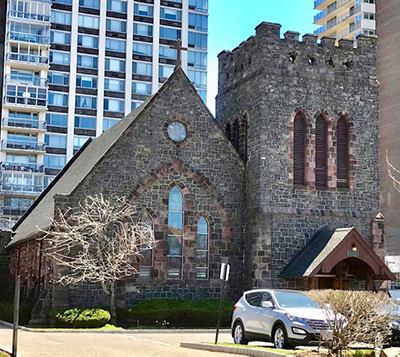
Sermon 2/22/2026 By Rev. Juhyung Choi

In the Wilderness of Trust 

Jesus was led up by the Spirit into the wilderness to be tempted by the devil. “He fasted forty days and forty nights, and afterwards he was famished.” (Matthew 4:2) At that very moment of weakness, the tempter comes and says, “If you are the Son of God, command these stones to become loaves of bread.” (Matthew 4:3) 

This is not only about hunger. It is about proof. It is a voice that says, “If you are the Son, prove it.” It is a temptation to test God instead of trusting God. It whispers, “If your need is not met now, maybe God cannot be trusted.” 

We know moments like this. The body is tired. The heart is anxious. The future feels blocked. In such times, faith can slowly turn into a demand for proof. 

Jesus answers, “It is written, ‘One does not live by bread alone, but by every word that comes from the mouth of God.’” (Matthew 4:4) 

Jesus does not deny hunger. He does not pretend that bread is unimportant. But he says we do not live by bread alone. Immediate need does not govern his whole life. God’s word is not a quick fix that removes every problem. It is the strength that keeps us from letting go of God in the middle of our problems. 

The devil does not stop. He takes Jesus to the holy city and places him on the pinnacle of the temple and says, “If you are the Son of God, throw yourself down; for it is written, ‘He will command his angels concerning you,’ and ‘On their hands they will bear you up, so that you will not dash your foot against a stone.’” (Matthew 4:6) 

It is a demand for visible proof. Something clear. Something we cannot miss. 

When we are anxious, we also want clear signs. We want prayer to bring quick answers. We want faith to produce visible results. But Jesus says, “Again it is written, ‘Do not put the Lord your God to the test.’” (Matthew 4:7) 

Testing God is not always unbelief. Sometimes it is faith with conditions. “If you do this, then I will trust you.” Jesus refuses that path. God is not an object to be tested. God is the One we lean on. 

Finally, the devil takes him to a very high mountain and shows him all the kingdoms of the world and their splendor. He says, “All these I will give you, if you will fall down and worship me.” (Matthew 4:9) 

Here the temptation is direct. The result will be good, so the method does not matter. Quick success. Great influence. Public glory. A crown without a cross. 

Jesus says, “Away with you, Satan! for it is written, ‘Worship the Lord your God, and serve only him.’” (Matthew 4:10) 

The three temptations are not three separate stories. They are one pressure, coming in different voices. They try to move God away from the center. They put need first, and they demand proof. And, almost without our noticing, they lead us to trust something else more than God. They do not say, “Do not believe in God.” They say, “There is something more reliable than God.” 

1

This is an old temptation—older than we think. We have heard this voice before, at the beginning of the story. 

We hear a similar voice in Genesis. The serpent says to the woman, “Did God say, ‘You shall not eat from any tree in the garden’?” (Genesis 3:1) But God had said, “You may freely eat of every tree of the garden; but of the tree of the knowledge of good and evil you shall not eat.” (Genesis 2:16–17) The serpent twists the word. What was generous becomes restrictive. What was good becomes doubtful. And then the woman sees the tree differently. “So when the woman saw that the tree was good for food, and that it was a delight to the eyes, and that the tree was to be desired to make one wise, she took of its fruit and ate.” (Genesis 3:6) “The eyes of both were opened, and they knew that they were naked.” (Genesis 3:7) 

Their eyes are opened, but what they see first is fear. Instead of freedom, they hide. 

Psalm 32 speaks about this hiding. “While I held my tongue, my bones withered away, because of my groaning all day long. For your hand was heavy upon me day and night; my moisture was dried up as in the heat of summer.” (Psalm 32:3–4) Hiding does not make us stronger. It dries us out. It turns the heart inward until even prayer feels difficult. 

But the psalm continues: “Then I acknowledged my sin to you, and did not conceal my guilt. I said, ‘I will confess my transgressions to the Lord.’ Then you forgave me the guilt of my sin.” (Psalm 32:5) 

Confession is not persuading God. It is coming back to stand before God again. It means turning around from the place where we were running away, and stepping into the light, so that God may meet us where we really are. 

Paul names this turning in a larger way: “For just as by the one man’s disobedience the many were made sinners, so by the one man’s obedience the many will be made righteous.” (Romans 5:19) What Jesus does in the wilderness is not simply passing a test. Where we fail, he chooses obedience. When we begin to doubt, he keeps trusting. And when we waver, he remains faithful. 

And the Gospel ends with a quiet detail: “Then the devil left him, and suddenly angels came and waited on him.” (Matthew 4:11) Jesus does not prove himself. He refuses to test God. He turns away from every false worship, and keeps God at the center. 

Lent is not a season to prove that we are strong. It is a season to notice where we are weak, where we are tempted to trust something else more than God. 

When a wilderness moment comes, we may ask ourselves: Am I looking for trust, or for proof? Am I holding on to God, or to something else? 

And we may also pray in a simpler way: Lord, teach us the quiet courage to trust. Give us grace to return, not to perform. 

Today the Gospel tells us that even in the wilderness, there is a path. Not a fast path. A path of trust. Not proof, but trust. Not hiding, but confession. 

“You are my hiding-place; you preserve me from trouble.” (Psalm 32:7) 

May this confession be our prayer during this holy Lent. Amen

2

Sermon 2/15/2026 By Rev. Juhyung Choi

Coming Down the Mountain 

Jesus took Peter and James and his brother John “up a high mountain, by themselves.” (Matthew 17:1) On that mountain, the three disciples saw something they had never seen before. “He was transfigured before them, and his face shone like the sun, and his clothes became dazzling white.” (Matthew 17:2) And then—“Suddenly there appeared to them Moses and Elijah, talking with him.” (Matthew 17:3) 

It is not an accident that those two appear. Moses belongs to the story of the covenant—the law given on the mountain at Sinai, the people led out of slavery, the long work of learning to live as God’s people. Elijah belongs to the story of the prophets—the voice that calls a nation back, the fire of truth, the courage to stand when faith grows thin; and that courage was renewed on Horeb, when he heard God’s quiet call again. Both of them knew mountains. Both of them knew the hiddenness of God. And now, on this mountain, they do not draw attention to themselves. They speak with Jesus. As if the Scriptures are saying, quietly and clearly: everything we have received—law and promise, warning and hope—is moving toward him. 

Peter spoke first. “Lord, it is good for us to be here; if you wish, I will make three dwellings here, one for you, one for Moses, and one for Elijah.” (Matthew 17:4) We understand his heart. When a moment is good, we want it to last. When prayer brings peace, we quietly think—If only we could stay here. 

But the Gospel does not let them stay there. Right then, “a bright cloud overshadowed them,” and a voice spoke out of the cloud: “This is my Son, the Beloved; with him I am well pleased; listen to him!” (Matthew 17:5) God does not tell them to remain on the mountain. The center of the mountain is not the feeling. It is the voice that speaks—and that voice gives direction. 

And “listen” does not mean only hearing sound with our ears. In the Bible, to listen is to receive the word with a willing heart, and to follow the One who speaks. So “listen to him” means this: Do not cling to what you saw. Do not build your faith on a single bright moment. Follow Jesus—especially as you come down the mountain. 

We see a similar pattern in Exodus. The Lord calls Moses up the mountain and says, “Come up to me on the mountain, and wait there; and I will give you the tablets of stone… which I have written for their instruction.” (Exodus 24:12) The mountain is not a place where we go to prove ourselves. It is a place where God calls, and we learn to listen. The light is given not as a reward, but as a gift—so that we 

can hear more clearly, and then live differently. 

1

Peter’s desire was human. But if we stop there, we can lose the way. Jesus did not come to remain on the mountain. He came down, and he went toward Jerusalem. He walked the road that leads through the cross—and into resurrection life. 

When the disciples heard the voice, “they fell to the ground and were overcome by fear.” (Matthew 17:6) Fear in God’s presence is not strange. We feel small. Words fail us. But Jesus does not stay far away. He comes close. “Jesus came and touched them, saying, ‘Get up and do not be afraid.’” (Matthew 17:7) So faith that listens is not a quiet moment that ends on the mountain. It is listening that leads to the next step—even when fear is still there. 

Then the Gospel gives us the clearest line of all: “when they looked up, they saw no one except Jesus himself alone.” (Matthew 17:8) Moses is gone. Elijah is gone. The cloud is gone. In the end, only Jesus remains. When faith becomes complicated, this brings us back to what is simple: the words of Jesus, and the touch of Jesus. 

And the story does not end at the top. It turns us toward the road again. “As they were coming down the mountain, Jesus ordered them, ‘Tell no one about the vision until after the Son of Man has been raised from the dead.’” (Matthew 17:9) The light of the mountain is understood fully only after the cross and the resurrection. Some things need time to deepen in the heart. But the direction is not delayed. Even before we understand everything, we are still called to follow. So what remains for us is not only a memory of the mountain. What remains is the word we carry as we come down. 

Down the mountain, the voices return. The ordinary pressures return. Our hearts are easily shaken. That is why the word of Jesus matters. It brings us back to a simple question: What is faithful here? What is loving here? To listen is not to be moved for a moment and then return to the same life untouched. To listen is to let the word become today’s step—to ask again: What should I hold on to? What should I release? 

This Sunday stands at the door of Lent. In a few days, we will come for ashes, and we will hear words that are honest and humbling. Ashes do not deny the light. They tell the truth about us. They remind us that we are not self-made, and not self-saving. They bring us back to reality—so that grace can meet us there. But today—before we enter that season—the Gospel gives us light. Not so that we can escape the world, but so that we can follow Jesus more faithfully within it. The light from the mountain does not remove all darkness at once. But it puts us back on the road. It helps us remember what matters. It gives us strength to walk again. And the Gospel leaves us with what is simple: “This is my Son, the Beloved… listen to him!” (Matthew 17:5) “Get up and do not be afraid.” (Matthew 17:7) So we do not hold on to the satisfaction of the mountain. We hold on to the word of Jesus. And we walk again in the ordinary place where we live each day—following that word, coming down the mountain. Amen

2

Sermon 2/8/2026 By Rev. Juhyung Choi

Light Reveals Itself Quietly 

Jesus says to his disciples, 

“You are the salt of the earth.” 

“You are the light of the world.” 

(Matthew 5:13–14) 

These words sound less like a command and more like a calling. Jesus does not say, “Live like this, and then you will become salt and light.” He simply says, “You are.” 

He does not begin by measuring the disciples’ readiness. He simply receives them as they are and names who they already are. 

This is not a judgment of their ability, nor a reward for their success. It is a gift given before any action, before any result. Before we show anything to God, God first calls us. And this matters because so much of our life runs on the opposite logic. We are trained to earn a name, to prove our worth, and to secure our place. Even our faith can slip into that pattern, quietly, without our noticing. We begin to think God’s love must be deserved, or God’s closeness must be achieved. But Jesus begins somewhere else—with grace. He gives an identity before he asks for a response. Salt does not draw attention to itself. It does not announce its importance. It mixes into the meal. And yet, without salt, the meal quickly loses its taste, and it does not keep. No matter how carefully it is prepared, without salt it does not last. Salt’s role is not to stand out, but to work quietly from within. The life of a disciple is like this. It is not a life that stands above the world to judge it, but a life that enters the world and stays with it. Light is not so different from salt. Light does not defeat darkness by becoming dark itself. It simply shines. This does not mean we ignore suffering or injustice. It means we keep our hearts from hardening. We refuse to become what we resist. And in that presence, the space is no longer the same. Light does not need to prove itself. By being there, it changes what can be seen. When Jesus speaks of salt and light, he is not talking about strong influence or visible success. He is pointing to a faithful way of life—steady, patient, and true. A life lived right in the middle of the world. 

That is why Jesus continues, 

“In the same way, let your light shine before others, 

so that they may see your good works 

and give glory to your Father in heaven.” 

(Matthew 5:16) These “good works” are not a performance, but the fruit of a life grounded in grace. What matters here is not the size of the good works or whether they attract attention. What matters is where they point. Light does not stay focused on itself. It shines, and through that light, people’s eyes are turned toward God. 

1

As we approach Lent, one story comes to mind. I have been reading The Brothers Karamazov by Dostoevsky. Alyosha, one of the novel’s characters, helps me see what Jesus means by a life that shines without trying to be seen. He does not explain his faith at length. Instead of trying to persuade others or prove that he is right, he simply stays with people. He remains beside those who are wounded, beside those who are confused, often without many words. His faith appears more in his way of being than in his arguments. And slowly, the people around him begin to change, not dramatically, but little by little. The direction of their lives shifts. This is not because of what Alyosha achieves, but because of who he is for others in that place. His faith is like light: quiet, steady, and real. 

And Scripture speaks in the same direction: not as a slogan, but as a way of life. The prophet Isaiah speaks in a similar way: 

“Then your light shall break forth like the dawn.” 

(Isaiah 58:8) 

Isaiah is not speaking to people who never worshiped. They did worship. They did fast. They used religious language. But something had come apart. Worship was here, and life was somewhere else. And when faith is divided like that, it can become strangely untouched, active on the surface, yet disconnected at the center. 

“You serve your own interest on your fast day, 

and oppress all your workers.” 

(Isaiah 58:3) The problem was not the lack of worship or prayer. The problem was that faith had become separated from life. 

So God speaks again about the meaning of fasting: 

“Is not this the fast that I choose: 

to loose the bonds of injustice, 

to undo the thongs of the yoke?” 

(Isaiah 58:6) What God desires is not more religious activity, but a faith that moves in the right direction. To draw near to God is not to add more things, but to examine what our lives are truly oriented toward. Lent is a time for this kind of reflection. It is not about becoming impressive, but about becoming true. It is not a season for gathering more, but a season for letting go. We know how easily we can lose our way. It is a time to look honestly at what guides our lives, what we follow, and what truly leads us. This is why Jesus says, “You are the light.” Light does not perform. It simply remains—and shines. And through that light, people are gently led to God. As we stand at the doorway of Lent, Jesus’ call to us is the same. He does not ask us to become brighter or more noticeable. He calls us to live as salt and light, right where we are. 

That is enough for this day. 

Amen

2

Sermon 1/18/2026 By Rev. Juhyung Choi

Come and See 

Today’s Gospel begins very quietly. John does not stir up the crowd. He does not offer a long explanation. He simply looks at Jesus and says, “Here is the Lamb of God who takes away the sin of the world.” It is not an explanation. It is a word that points in a direction. John does not draw people toward himself. He turns their attention away from himself and points to where Jesus is. 

Faith often begins in this way. It does not begin with certainty. It does not begin with full understanding. It begins when someone quietly points the way, and we take a first step in that direction. We often think that faith means knowing more, understanding more clearly. We assume that only then can we truly believe. But the Gospel shows us another way. It does not ask us to understand first. It does not demand that we reach a conclusion. It simply points in a direction and invites us to take a step. Faith begins there, with a small and almost unnoticed movement. 

John then says something else: “I myself did not know him.” This confession matters. John was entrusted with God’s work, yet he did not begin with full knowledge. He did not start with certainty. Our faith is often like this as well. To have believed for a long time does not mean that all questions have disappeared. It may mean, instead, that we have learned to live with our questions. Those questions do not mean that faith has grown weak. John did not know either. Yet he stood where he was and pointed toward the way of God. 

When the two disciples hear John speak, they follow Jesus. They do not yet know who he is. They do not know what he will do. They simply follow. Jesus turns and asks them, “What are you looking for?” This is not a test. It is not a question of right or wrong. It is a question that looks into their hearts. They answer, “Rabbi, where are you staying?” It is a simple question. Not a theological one. Not a question about life’s meaning. Just this: Where are you staying? Jesus replies, “Come and see.” He does not explain. He does not give them the right answer. He simply invites them to come with him. The Gospel then says, “They came and saw where he was staying, and they remained with him that day.” Nothing extraordinary happens. No 

1

miracle is recorded. No long teaching is given. Only one sentence remains: They remained with him that day. 

This short line invites us to reflect. What is faith? It is not a matter of how much we know. It is not a matter of how much we accomplish. The Gospel of John speaks of something more basic: where we remain, whether we stay. In John’s Gospel, discipleship does not begin with a vow or a bold decision. It begins with remaining. Remaining is not easy. We would often prefer clarity, answers, and a clear direction. We want to know where this path will lead. But the Gospel does not give them that. It gives them time—time spent in the presence of Jesus. To remain does not mean doing nothing. It means not running away. It means not rushing to conclusions. When life is unclear, when God’s will is not obvious, it means staying where we are. 

In some seasons of life, there is more space for remaining, as our bodies change over time. And we learn that life does not always ask us to do more, but sometimes to stay, to be present, and to remain. Yet the Gospel tells us that this time of remaining can be the time when faith grows deepest. 

After remaining with Jesus, one of them, Andrew, goes to find his brother Simon. They may not have spoken much that day. But that day remained with them. Andrew simply says, “We have found the Messiah.” There is no long explanation, only the testimony of having met him. When Simon comes to Jesus, Jesus looks at him and says, “You are Simon son of John. You are to be called Cephas.” Simon is not yet a rock. He will falter. He will fail. But Jesus does not see only who he is now. He sees who he is becoming. A new name is not a demand. It is a promise, a new possibility opened in God. 

So it is with us. What we are now is not the whole story. God already sees what we do not yet see in ourselves. 

Today’s Gospel speaks quietly to us. Faith is not about grasping distant truths. It is about a life that remains near Jesus. The Eucharist we share today is part of that same invitation. Even now, the Lord says to us, “Come and see.” Remain at the table. Remain long enough. Remain with the Word, with the bread and the wine. And in that remaining, entrust yourself to the God 

who is already at work, slowly shaping our lives. Amen

2

Sermon 1/11/2026 By Rev. Juhyung Choi

Jesus Standing Among the People 

Today we celebrate the Feast of the Baptism of the Lord. On this first Sunday of the season after Epiphany, we return to the scene where Jesus’ public ministry begins. But this beginning is different from what we might expect. There is no great announcement. There is no new teaching yet. At the Jordan River, many people had already gathered. They listened to John the Baptist, looked honestly at their own lives, confessed their sins, and went down into the water to be baptized. Right in the middle of them, Jesus is standing. Without drawing attention, without being set apart, he stands quietly among the people. 

The Gospel of Matthew tells this story very simply. Jesus comes from Galilee to the Jordan River. He comes to John to be baptized. For those of us who know who Jesus is, this scene feels unfamiliar. Why does Jesus need to be here at all? That question naturally arises. John the Baptist asks the same question. “I need to be baptized by you, and do you come to me?” John’s words are completely reasonable. Jesus is without sin. 

But Jesus answers him, “Let it be so now; for it is proper for us in this way to fulfill all righteousness.” This is not simply an explanation to convince John. It shows us the path Jesus chooses to walk. Jesus does not put himself first. He does not try to prove who he is. Instead, he looks to the will of God. And he already knows where that path will lead him. 

The place where Jesus stands is not a place of power over others. It is not a place of self-exaltation. It is a place beside the people. Not a place of judgment, but a place of shared confession. Not a place to set himself apart, but a place where he enters the same water with those who confess their sins. What matters most here is not simply that Jesus was baptized. What matters more is that he did not refuse to stand in that place. Though he was without sin, Jesus willingly chose to fulfill God’s will from the place of sinners. 

This choice was not a single act of humility. It clearly reveals the heart of the Incarnation: God entering directly into the center of human life. That the Word became flesh does not only mean that Jesus took on a human body. It means that he entered the very middle of human life, even the place of confession and weakness. This choice shaped the direction of Jesus’ entire life. His way was never to look down from above, but to go down and stand with others. 1

This path had already been foretold long ago. In Isaiah, God says, “Here is my servant, whom I uphold, my chosen, in whom my soul delights;” And then God continues, “He will not cry or lift up his voice, or make it heard in the street; a bruised reed he will not break, and a dimly burning wick he will not quench;” God’s servant does not stand above others. He does not break an already bruised reed. He does not quickly extinguish a dimly burning wick. He remains quietly beside them and stays with them to the very end. 

The baptism of Jesus was the moment he accepted this servant’s path as his own. And upon that choice, God’s response follows. When Jesus comes up from the water, the heavens are opened. The Spirit descends like a dove. And a voice from heaven is heard, “This is my Son, the Beloved, with whom I am well pleased.” This voice does not give Jesus a new identity. He is already the Son of God. What matters is the moment when this voice is spoken. 

It is not after a miracle. It is not after the praise of the crowds. It is when Jesus stands among sinners, when he goes down into the water with them, sharing their place. God is pleased with that choice. The path of coming down, not trying to rise above; the path of solidarity, not separation; the path of carrying together, not judging from a distance. This is the path that accords with God’s will. In the Acts of the Apostles, Peter describes Jesus’ life this way: “how God anointed Jesus of Nazareth with the Holy Spirit and with power; how he went about doing good and healing all who were oppressed by the devil, for God was with him.” 

The Feast of the Baptism of the Lord asks us a question. What kind of God do we believe in? And where are we standing now? The baptism of Jesus was not the beginning of rising upward. It was not a moment of self-display. It was a choice to go down among the people, a decision to fulfill God’s will from the place of sinners. God was pleased with that choice. 

As we take the first steps of the season after Epiphany, the Church stands again before this scene. And we confess this truth: God’s way does not begin in high places. It begins where we come down and stand among the people. On that path, Jesus is already there. And Jesus shows us today that living among others, sharing life at its center, is the way we are called to walk. Amen

2

Sermon 12/28/2025 By Rev. Juhyung Choi

Where Are You? 

Today, we have heard many stories—from different times and places. Yet they are held together by one question. A question first heard long ago, in a garden. “Where are you?” (Genesis 3:9) The man and the woman hid themselves. They were afraid—afraid of being seen as they were. But God did not begin with anger. God began by looking for them. Before people went looking for God, God came looking for them. This is where the story of Christmas begins. 

As time passed, the story continued. Abraham was not someone who obeyed because he understood everything clearly. There was fear and uncertainty, yet he did not leave his place before God. Christmas is not only the story of great and heroic faith. It is the story of those who stayed. The prophets spoke of hope in the same way—not sudden brightness, but new life rising from what seemed finished, like a shoot from a cut-down stump. The hope of Christmas begins quietly where there is already weariness. 

The story of Mary is the same. She was confused. She asked questions. But she did not run away. She opened this moment of her life to God. Christmas is not proof of perfect faith. It is the courage to receive God’s word here and now. 

And then we come to the scene we know well. No room at the inn. A manger. Shepherds keeping watch at night. God’s story did not begin in places of importance or comfort. It began in places people overlooked. Where people hesitated to stay, God chose to stay. 

All the readings we have heard today tell us this: God is not distant or far above us. God enters human life. Christmas is our confession that God did not turn away from human time and human space. And so the question remains: “Where are you?” This question is not a rebuke. It is an invitation. Wherever we are—joyful or tired, settled or unsettled—God meets us there. Christmas is not the day our lives suddenly change. It is the day God begins to dwell at the center of our lives. May these ancient stories continue quietly in us after this Eucharist has ended. And may the truth that God is already among us shed light on our lives, slowly and clearly, in the days after Christmas. Amen.

Sermon 12/21/2025 By Rev. Juhyung Choi

Life That Begins with Mercy 

In today’s Gospel, Matthew tells the story not from Mary’s point of view, but from Joseph’s. Luke stays close to Mary. Matthew invites us to stay with Joseph, to watch him, to listen to what is happening in his heart. Mary was engaged to Joseph. They were not yet living together. Then her pregnancy became known. The Gospel tells us that the child was conceived by the Holy Spirit. But Joseph did not know that. And in that society, this was not a small misunderstanding. Pregnancy during engagement was a valid reason to end the engagement. And under the Law, an engaged woman judged to have been unfaithful could face public shame and severe punishment (Deuteronomy 22:23–24). Joseph could have accused Mary publicly. He could have protected himself by exposing her. Mary’s life could have collapsed in an instant. 

But Scripture describes Joseph in this way: “Her husband Joseph, being a righteous man and unwilling to expose her to public disgrace, planned to dismiss her quietly” (Matthew 1:19). This phrase—“a righteous man”—matters. It does not mean that Joseph simply followed the letter of the Law. Rather, it points to his understanding of the spirit of the Law: mercy and compassion. 

Joseph could have insisted on his rights. According to the Law, he could have accused Mary publicly. Yet he chose not to do so. As far as the situation allowed, he tried not to push her into greater danger or deeper shame. For that reason, he decided to end the engagement quietly. 

This was not a heroic decision. It was a pause, a refusal to allow the situation to turn violent. Joseph did not understand everything, nor had he let go of everything. Still, he chose not to create a deeper wound. 

It is precisely here that God’s work begins. God does not act only through perfect people, but through small pauses, through narrow spaces where harm is restrained and mercy is allowed to breathe. 

While Joseph was turning these things over in his mind, God spoke to him through a dream. “Joseph, son of David, do not be afraid to take Mary as your wife, for the child conceived in her is from the Holy Spirit.” (Matthew 1:20) Notice where God speaks. God does not break into Joseph’s life with violence or pressure. God speaks right in the center of Joseph’s struggle—in the place where mercy has already made room. God does not force the heart open. God enters a heart that is already opening through compassion. And the angel continues: “She will bear a son, and you are to name him Jesus, for he will save his people from their sins.” (Matthew 1:21) 

The name Jesus means, “God saves.” And Matthew is clear: this saving work does not begin with power. It does not begin with control. It does not begin with force. It begins with mercy. Joseph’s merciful decision did not only protect one woman or one household. It became part of the beginning of salvation for the world. Mercy made space for life. 

Today we also heard Isaiah’s words: “Look, the young woman is with child and shall bear a son, and shall name him Immanuel.” (Isaiah 7:14) Immanuel means: “God is with us.” Matthew tells us that this promise is fulfilled in 1

the birth of Jesus. God is not distant. God does not remain safely above human weakness and confusion. God comes near—into fear, into hesitation, into the complicated places where people do not know what to do. Joseph’s heart was exactly such a place. 

And Jesus is truly Emmanuel, God with us. Not only “with us” when we are strong and faithful, but “with us” in the very places where life feels fragile and choices feel heavy. Matthew also makes a quiet point: when Joseph takes Mary as his wife, Jesus becomes, within the story’s legal and social world—a son of David. Joseph’s obedience, and Joseph’s protection, become part of how the promise is carried forward. 

The early Church did not see this as only one family’s unusual story. They confessed it as the fulfillment of a promise God had spoken long ago. Paul writes in Romans: “the gospel concerning his Son, which he promised beforehand through his prophets in the holy scriptures.” (Romans 1:2–3a) The birth of Jesus is the fulfillment of a long promise. And in today’s Gospel, that promise becomes real through the merciful decision of one person. 

Paul also speaks of Jesus as one “descended from David according to the flesh.” (Romans 1:3) Behind that short phrase stands Joseph, the one who welcomed Mary, the one who gave Jesus a place, the one who chose mercy when he could have chosen accusation. 

When Joseph wakes from his dream, he accepts what has been entrusted to him as God’s will. He takes Mary as his wife. This was not an easy choice. It meant letting go of his honor. It meant carrying misunderstanding. It meant trusting God more than his own plan. And this is an important Advent truth: Christmas does not come only through the courage of great heroes. God brings life through quiet mercy—through hearts that choose to protect rather than expose. Mercy gives birth to life. Mercy becomes the path through which God’s work is done. When mercy lives in us, God’s life can be revealed through us. 

On this final Sunday of Advent, we ask ourselves: What does it mean to wait for the Lord? We often speak of Mary’s faith, and we should. But Matthew asks us to see Joseph as well. Mary’s obedience and Joseph’s mercy belong together. A heart that listens to God’s word, and a heart that protects and embraces others—both are part of the way God comes near. 

And on this last Sunday of Advent, this season does not ask us to make a show of our faith. We are invited to prepare our hearts. A heart where the Lord may enter. A heart where life may rest. A heart where compassion moves first. Our faith, like Joseph’s righteousness, should not stop at rules and forms. We are called to live with mercy and grace. And when we choose to protect rather than judge, to embrace rather than condemn, we become instruments of God’s work. 

As Christmas draws near, we make room for Emmanuel, Jesus, God with us. Like Joseph, we let go of fear and trust God’s will. This is how Emmanuel comes to us: through mercy, through obedience, through hearts that remain open. And when we welcome him in this way, new life will begin, within us, and through us. Amen.

Sermon 12/14/2025 By Rev. Juhyung Choi

A Question from One Who Stands in the Wilderness

The time when Jesus and John the Baptist lived was not simply a time of confusion. It was a time when fear and
pressure had slowly built up over many years. People carried a deep hunger in their hearts, a longing that was
hard to put into words. Roman soldiers were stationed throughout the land, and heavy taxes burdened the people.
Those with little fell more quickly, and the distance between the rich and the poor grew wider. The Herodian rulers
kept their power only with Rome’s permission, and that power was fragile and often cruel. Even among religious
leaders, tension was high. Words of faith were spoken, but real life did not seem to change.
Yet it was in such a time that a quiet hope began to awaken. People asked, “When will the kingdom of God
come?” “Who will lift us up again?” These questions slowly grew in the hearts of the people. Waiting was not
impatience. It was a dream of a different kind of life. It was hope rising from the very bottom.
Then a voice was heard in the wilderness. It did not come from the center of the city. It did not come from the
beauty of the temple. It was the voice of John the Baptist.

The wilderness looks empty at first glance. In Scripture the wilderness is often the place where God’s way begins
again. Israel learned how to walk with God in the wilderness. When the things they relied on were taken away,
when they could do very little on their own, God formed a new relationship with them. The wilderness is the place
where human effort stops, and God’s work begins.
That John stood in the wilderness already speaks for itself. His place became his sermon. Even his silence
pointed the way, like a signpost. His very presence was a proclamation: “A new way begins here.” So people left
the comfort of the city and went out to the wilderness. Their steps carried a deep desire to change their lives. They
wanted to hear again a truth they had almost forgotten.

Jesus later asked the crowds about John: “What did you go out into the wilderness to look at? A reed shaken by
the wind? Someone dressed in soft robes?” (Matthew 11:7–8) In these questions, Jesus offers two images.
He begins with the image of a reed shaken by the wind. A reed bends easily. Its roots are shallow, and it has no
firm center. Jesus was not saying that John was weak or unstable. Rather, he was pointing to the attitude of many
leaders of that time—people who changed their words depending on power or public opinion. Some adjusted their
message to please those in authority. Others spoke differently depending on the crowds. Those who went out to
see John may have wondered if he was the same.
But John did not waver. He did not depend on power. He did not fear the uncertainty of his place. Even in prison,
his eyes were still turned toward the Messiah. When John sent his disciples to ask Jesus, “Are you the one who is
to come, or are we to wait for another?” (Matthew 11:3), this was not a question of doubt. It was a prayer, a desire
to remain faithful to the very end. John was not a reed shaken by the wind. He was a steady voice standing
upright in the wilderness.
Then Jesus offers another image: “Did you go out to see someone dressed in soft robes?” In that time, fine
clothing was not just fashion. It was a sign of privilege and security. Those who wore such clothes lived in safe
1

places. They did not need to take risks. Outwardly, they might appear religious, but often they were far from the
heart of faith.
When religion becomes too comfortable, its words lose their power. They no longer awaken the soul. Jesus does
not say this to condemn. He says it to show why John was different. John did not choose comfort. He did not
speak in ways that benefited himself. His path was rough and lonely, but his direction was clear. That is why Jesus
speaks so highly of John.

We are not asked to imitate John’s life. Advent does not call us to live exactly as he did. Rather, through John’s
life, we are invited to look quietly at our own direction. Faith does not begin with dramatic decisions. It begins with
small, daily turning of the heart. Advent is not a season that tells us to do more. It is a season that asks us where
we are standing and what we are facing.
John’s life asks us gentle questions: What winds cause me to waver? Have comfort and familiarity slowly shifted
my direction? What path am I truly seeking? These are not questions meant to accuse us. They are guides that
help us begin walking toward the light again.

The Third Sunday of Advent is known as Gaudete Sunday. “Gaudete” means “Rejoice.” It invites us to pause
and breathe in the midst of waiting. But this joy is not loud or dramatic. It is the quiet joy that rises when we
glimpse a light still far away.
In our own lives, there are times when change does not come, and hope feels hard to hold. Yet sometimes, in that
very place, we suddenly realize that God has been quietly at work all along. That realization becomes the
beginning of joy. Isaiah spoke of a new road opening in the wilderness. Jesus showed that small signs of healing
can carry great hope. John waited for the Messiah even from prison. Though his movement was confined, his
heart remained open to God. Even in darkness, he did not lose his longing for the light.

Advent continues to ask us: “What first drew you to faith?” “Whom are you waiting for?” “How are you standing
before the path God is opening?” The light has not yet fully arrived. But the fact that we have begun to walk
toward it is already hope.
Faith does not need to be perfect. What John shows us is not perfect certainty, but a steady heart that keeps
facing one direction. That steady heart helps us recognize the Messiah and remain grounded even when life
shakes us.
What matters most in faith is not a grand decision, but the small direction we choose today. When the light seems
far away, taking one step toward it, that is where faith takes root. May we come to see that, in this season of
Advent, God is already quietly at work among us. And may that awareness grow into a gentle joy deep within our
hearts.
Amen.

Sermon 11/23/2025 By Rev. Juhyung Choi

The King Who Remembers Us to the Very End

Today is Christ the King Sunday, the final Sunday of the Church year. When this day passes, we enter
Advent and begin a new year in the life of the Church. Even in the calendar of the world, we stand near
the end of another year.
At this time of year, we naturally look back. We remember moments of joy, but we also carry memories
that still cause pain. Some things went well, just as we had hoped. But other concerns remained
unresolved, and some burdens stayed with us until the very end.
On this Sunday we are invited to remember what it means to confess Jesus Christ as our King, and to
ask ourselves: Whom did we follow throughout this past year? And whom will we follow as a new year
unfolds before us?
When we hear the word king, we usually think of power, dignity, and authority. But the Gospels show us
a very different kind of king. On the cross Jesus appears weak and powerless, surrounded by mockery
and insult.
Yet when we read today’s Scriptures carefully, we see that the kingship of Jesus is not simply a symbol
or a paradox. It is the fulfillment of the true king whom the Scriptures have long awaited. The problem is
not Jesus’ appearance on the cross, but the old images of kingship that we have carried in our minds.
In the time of Jeremiah, the leaders of the people failed to care for those who were weak. They were
shepherds who scattered the flock rather than protecting it. But God promised a new king—one who
would gather the lost, restore life, and lead the people with justice and compassion.
In Scripture, a king is indeed one who reigns, yet the heart of that reign is gathering the scattered and
restoring the wounded.
When we look at the crucifixion through this lens, we see more clearly who the promised king truly is.
On the cross Jesus suffers the most unjust violence and humiliation, yet he prays,
“Father, forgive them; for they do not know what they are doing” (Luke 23:34).
This prayer is not simply an expression of kindness. It is an action that reveals the justice of God. We
often think of justice as punishment, repayment, or getting what one deserves. But in the Bible, justice is
connected to restoring broken relationships, leaving open a path for someone to return, and making
room for a new beginning.
On the cross Jesus breaks the cycle of violence. He refuses to answer hatred with hatred. He opens a
way of forgiveness and begins a new order grounded in peace.
There is another scene. One of the criminals crucified beside Jesus turns to him in his final moment and
says,

1

“Jesus, remember me when you come into your kingdom.”
(Luke 23:42)
Scripture does not tell us what his life had been like. But it is clear that people no longer saw any hope in
him, and he himself had very little reason left to hope.
Yet Jesus answers him,
“Truly I tell you, today you will be with me in Paradise.” (Luke 23:43)
This is more than a comforting promise to one dying man. It is the moment when the true king foretold
by Jeremiah is revealed on the cross. A man whom everyone had given up on—someone judged as
useless and beyond recovery—is held in the memory and mercy of Jesus until the very end.
The name that Jeremiah proclaimed,
“The Lord is our righteousness” (Jeremiah 23:6),
becomes a living reality in the words that come from the lips of Jesus as he hangs upon the cross.
The Letter to the Colossians describes Christ as “the image of the invisible God” (Colossians 1:15). It
is in the place that looks weakest—the cross—that the peace of forgiveness and reconciliation begins to
shine.
Now we turn the question toward ourselves:
What does it mean for us to confess Jesus as our King?
It means learning to loosen our hold on the measures of strength that the world teaches us, and slowly
learning the measures of Jesus instead.
Throughout the year, many different “kings” may have taken root in our hearts: the desire to be
recognized, anxiety, and stubborn pride. There were moments when we neglected relationships, and
even the quiet voice of resignation that says, “It is too late now.” These, too, can become kings we follow
without realizing it.
The story of the criminal in Luke’s Gospel speaks directly to these places.
Even when there is nothing to boast about, even when nothing seems to have changed, Jesus still
says,
“You will be with me.”
Even if the past year holds more regret than accomplishment, God’s gaze upon us is different from the
gaze of the world.
The kingship of Jesus is not a rule that welcomes only the successful.
It is the reign of love that refuses to let go, even until the very end.
Standing before this King at the close of the Church year does not mean writing a list of failures or
offering a report of our shortcomings. It means laying down the burdens we have carried—our feelings of
inadequacy, our self-blame, the anger or hurt still in our hearts—and entrusting ourselves once again to
the One who restores our lives.

2

And this does not require heroic decisions.
Often it begins with something very small—remembering someone in prayer, choosing tenderness over
irritation, allowing one moment to be more generous than expected.
Through such small graces, the life shaped by the King of the cross begins to grow.
As Advent begins, we enter again the season of waiting for the One who comes. A new year will open
before us, and none of us knows what it will bring. But one thing is certain: we already know who the
King of that year will be.
The One who gave himself for us on the cross.
The One who remembers the forgotten and the rejected.
The One who opens peace not through violence, but through forgiveness and reconciliation.
He is the King who walks with us into the year ahead.
Standing at the threshold of a new Church year, we may take up the simple prayer that rose from the
cross:
“Lord, remember me when you come into your kingdom.”
Within this prayer is both the weight of the year that has passed and the hope of the year to come.
May the true King revealed on the cross hold our past with mercy, walk with us through the days ahead,
and help us welcome the new year with a quiet and steadfast heart under his gentle reign.
Amen.

Sermon 11/16/2025 By Rev. Juhyung Choi

Hope of New Creation Rising in the Midst of Collapse

Last week, we heard about the Sadducees. They enjoyed honor and power because they stayed close
to the authority of the Jerusalem temple. For them, faith lived inside a visible system. God, in their
minds, was the One who kept that system safe. Faith became the same as stability, and God became
the guardian of the world they had built.
But history shows us a painful truth. The temple that seemed so strong was destroyed. Not one stone
was left on another. The people who thought they trusted God were actually trusting stones and
institutions. Their faith was turned toward what they had made, not toward God.
When Jesus says, “Not one stone will be left upon another” (Luke 21:6), he is not only speaking of a
future disaster. He is breaking open the way people build their lives on things that cannot last.

We are not so different. We also lean on many things—our health, our reputation, our money, our
families, our social position. These feel like the foundation of our lives. But when these things shake or
fall apart, we feel as if our whole being is collapsing. It feels like the ground is opening under our feet.
Fear rises, and it seems that nothing is safe.
And yet, this moment can become the time when we meet God again. When we finally see that nothing
in this world is eternal or absolute, we stand at the true beginning of faith: humility. Collapse is not the
end; it is, in fact, the threshold of God’s new beginning.

One day, we will leave behind everything we trust and everything we hold. This is a truth we cannot
escape. But this does not mean we turn away from the world. We must work faithfully, build
relationships, and carry our responsibilities. We live in the world, but we do not give our whole hearts to
it. This is our Christian vocation.
When this balance is lost and we treat things of the world as ultimate, our lives soon feel empty and
unstable—like a house built on sand. Everything we have and everything we rely on is a gift from God.
So our true foundation is not the world itself, but the God who made the world and still holds it.
This God is not far away or abstract. God is present in the people we meet, in the breath of nature, and
in our daily work and relationships. All that God gives—people, life, time, work, creation—are holy gifts.
If we cling to them too tightly, or if we ignore them carelessly, the harmony God entrusted to us begins to
break. Faith means caring for all these relationships with integrity and balance. This is how we shape
God’s order in a broken world. This is the life of the kingdom of God already among us.

1

Today’s Gospel also speaks of trials of faith. Jesus warns, “Many will come in my name… Do not go
after them” (Luke 21:8). This is not an order to calculate the end of the world. It is an invitation to stay
steady even in fear.
When the world seems to fall apart, true faith holds on to trust in God. Christians look at chaos and
quietly say, “This is not the end; this is the beginning of God’s new work.” Wars, disasters, injustice, and
confusion are not only destruction; they are also the labor pains moving us toward God’s new world.
As the prophet Isaiah says, “I am about to create new heavens and a new earth” (Isaiah 65:17). Even on
top of ruins, God begins new creation. Collapse is never the final word. It is God’s preparation for what is
new and holy.

Jesus also says, “This will give you an opportunity to testify” (Luke 21:13). Faith becomes clearer in
crisis than in peace. Faith is not a way to avoid suffering, but a way to witness to God inside suffering.
Even if people close to us fail us, Jesus gives this promise: “Not a hair of your head will perish” (Luke
21:18). God remembers us and holds us—even the smallest part of who we are.
“By your endurance you will gain your souls” (Luke 21:19). This does not mean we must force ourselves
to endure pain. It means placing deep trust in the new life that God gives. This life goes beyond simple
survival. It points toward the vision Isaiah saw—a world where tears are gone, where the wolf and lamb
eat together, and where all creation lives in peace.

As we approach the end of the year, our days may feel repetitive or empty. Work repeats, relationships
feel familiar, and it becomes easy to miss the holiness inside them. But a person of faith finds meaning
even in repetition.
A believer gives thanks for small things, holds life gently, neither grasping too tightly nor letting things
slip away, and sees God’s breath in every relationship. When we live each day with such awareness,
ordinary time becomes holy time. Daily life becomes prayer; our relationships become a form of worship;
even small responsibilities become places of witness.

Collapse is not something to fear. It can be the beginning of God’s new creation. Even if the temple falls,
God is still alive. Even if everything we lean on shakes, God’s love does not shake.
Even now, God is quietly creating a new heaven and a new earth within our lives.
May our faith join this new creation with humility and patient trust.
And may God’s peace and the joy of new life gently rise again in our everyday lives. Amen.