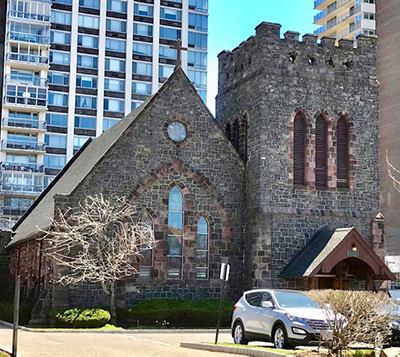
Sermon 8/17/2025 By Rev. Juhyung Choi

God’s Vineyard and the Fire of Transformation 

Isaiah 5:1–7, Psalm 82, Hebrews 11:29–12:2, Luke 12:49–56 

Today’s Scripture is not just a gentle encouragement or a comforting word. It is a call that demands deep reflection and decisive action. At its heart lies a single, piercing question: “What kind of fruit are you bearing?” 

This question carries weight for the young, but it resonates even more deeply for those who have walked through many seasons of life. The longer we live, the heavier this question becomes, urging us to pause and examine the fruit of our lives. It calls us to look back on the path we’ve traveled and to consider how we will live the days ahead. 

Let’s begin with the “Song of the Vineyard” from Isaiah 5: 

“My beloved had a vineyard on a fertile hill. He cleared it of stones and planted choice vines. He built a watchtower and prepared a winepress, expecting good grapes, but it yielded only wild grapes. The vineyard of the Lord is the house of Israel; He expected justice, but saw bloodshed; righteousness, but heard a cry.” 

The owner of this vineyard spared no effort. He prepared the soil, removed the stones, planted the best vines, built a watchtower to protect it, and even carved out a winepress for the harvest. He did everything to ensure a bountiful crop. He entrusted all of this with the expectation of a rich harvest. But instead of sweet grapes, the vineyard bore only wild, bitter fruit. 

God’s expectation was clear: He wanted justice, love, fairness, and mercy. But what grew instead was injustice, violence, exploitation, and indifference. In Judah at that time, society was marked by political unrest and deep inequality. Wealthy elites seized land from the poor, leaving families destitute. Courts delivered judgments in favor of the powerful. Priests and religious officials kept outward rituals while 

ignoring the covenant’s demand for justice and mercy. This was not merely individual sin; it was systemic corruption. God exposed their hypocrisy and injustice. 

This same truth comes to us. Our lives—our health, our families, our work, our church, our faith—are not possessions for our comfort but vineyards entrusted to us by God as a holy stewardship. The question is not simply “What blessings do I enjoy?” but “What fruit am I returning to the Lord?” 

But what fruit are we producing in this vineyard? Are we growing the fruit of love and justice that God desires, or are selfishness and apathy taking root like wild grapes? 

Psalm 82 makes God’s expectations clear: 

“How long will you judge unjustly and show favor to the wicked? Defend the weak and the orphan, uphold the rights of the poor and the needy, rescue them from the hand of the wicked.” 

1

God’s justice is different from the world’s justice. In Scripture, justice is always paired with mercy. Protecting the vulnerable and defending their rights is at the heart of God’s justice. For the Church, standing with the powerless is not a political program; it is the essence of the gospel. 

In our world today, we see poverty among the elderly, child abuse, the struggles of refugees and immigrants, and the isolation of the disabled. To ignore such suffering is not merely a neglect of charity; it is to turn away from God Himself. 

Hebrews 12:1–2 gives us this call: 

“Since we are surrounded by so great a cloud of witnesses, let us lay aside every weight and the sin that clings so closely. Let us run with perseverance, keeping our eyes on Jesus, the pioneer and perfecter of our faith.” 

The life of faith is like a marathon. The faithful lives of Abel, Noah, Abraham, Moses, David, and countless unnamed martyrs inspire us today. Scarred by struggle yet steadfast, they now surround us like a great stadium of witnesses, urging us onward. Their endurance lights our way and reminds us to cast aside burdens such as regret, bitterness, and misplaced loyalties. 

This race is not solitary. As the Church, we are companions in the same course—called to strengthen one another, lift those who stumble, and move forward together with our eyes fixed on Christ. 

In Luke 12:49–56, Jesus declares: 

“I came to bring fire to the earth, and how I wish it were already kindled! Do you think I came to bring peace? No, but division.” 

In ancient Jewish thought, fire had three meanings: 

Purifying fire, burning away impurities like dross from metal (Malachi 3:2–3). 

Fire of judgment, God’s tool to confront evil (Isaiah 66:15–16). 

Fire of the Spirit, like the flames at Pentecost, bringing new life and mission (Acts 2:3). 

The fire that Jesus spoke of holds all three of these meanings together. It purifies us, it confronts and judges evil, and it leads us into the new life of the Spirit. When this fire reaches into our families and our society, old orders are shaken, and God’s new creation begins to break forth. 

At first, these words about division can sound troubling, as though Jesus were encouraging conflict even within families. But His intention was not to glorify conflict. Rather, He was pointing to the radical upheaval needed to transform a corrupt society. The fire of God’s kingdom must reach into the most basic human relationships, even within families, to uproot old loyalties and plant new values. 

As new wine cannot be poured into old wineskins, so the life of the Spirit cannot be confined to patterns of injustice and complacency; true renewal requires a breakthrough. It calls for daily effort to be remade, to let go of what is comfortable but corrupting, and to embrace the new creation God is bringing to birth. 2

If we cling to the old wineskins, we will not only resist God’s new creation but risk losing the very life of the Spirit meant to renew us. 

Jesus’ words about fire were not just about personal purification but a bold challenge to the unjust structures of His time. He came not with the sword of rebellion but with the fire of God’s kingdom: exposing hypocrisy, confronting injustice, and planting the seeds of a new creation. In Palestine, the Roman Empire, Herod’s family, and a few temple elites controlled land and taxes, pushing many into poverty. The temple, meant to be a place of worship, had become a tool for maintaining inequality. 

Jesus’ fire was a call to expose and dismantle these unjust systems, not through violence, but through the power of God’s Word and the practices of a faithful community. 

We need this fire in our lives today. The hardened habits of selfishness, unforgiveness, or reliance on worldly values must be burned away by the fire of transformation. Change is painful, but it’s the only way to bear new fruit. 

We are often quick to notice changes in the weather but slow to see the signs God places before us. Yet God’s signs are all around us—in the needs of our families, the pain of our neighbors, and the opportunities for change within our church. These are not distant or hidden signs but invitations in daily life. Like the people in Jesus’ time, we must learn to read and respond to the signs God gives us today. 

God has planted each of us in His vineyard to bear fruit, not the wild grapes of injustice and complacency, but the fruit of love, truth, mercy, and faith. This fruit does not grow by chance; it grows when hearts are purified, when lives are reordered, and when the fire of God transforms us from within. 

The vineyard is not ours; it is entrusted to us as holy stewardship. The fire is not ours; it is God’s gift for purification and renewal. And the fruit is not for our pride, but for the glory of God and the healing of the world. 

Let us pray that God’s spark ignites anew in our hearts, our homes, and our church. When that fire becomes words of love, acts of forgiveness, and moments of prayer, God’s vineyard will overflow with abundant fruit. 

Surrounded by so great a cloud of witnesses, let us run with perseverance, our eyes fixed on Jesus, the pioneer and perfecter of our faith. On this road, the love of God will make us new. Amen. 

3

Sermon 8/10/2025 By Rev. Juhyung Choi

Walking by Faith, Looking at the Stars 

Genesis 15:1–6; Psalm 33:12–22; Hebrews 11:1–3, 8–16; Luke 12:32–40 
We live in uncertain times. Economic troubles, climate change, war, and global instability make us ask hard questions: “Where is God? Do God’s promises still matter?” The future feels foggy, and even the present is hard to endure. 
In Genesis chapter 15, Abraham had just won a battle, but he was still anxious. He had no children, and this made him worry about the meaning and future of his life. In the ancient world, having no heir meant more than personal sorrow, it meant that the family name would disappear, the legacy would vanish, and there would be no one to carry on the memory or protect the household. 
Then God spoke: 
“Do not be afraid, Abram, I am your shield; your reward shall be very great” (Genesis 15:1). 
In Genesis chapter 15 verse 1, God says to Abram, “Do not be afraid.” The Hebrew for this phrase is “Al-Tira,” which means more than comfort—it is a declaration of God’s presence. God does not deny Abraham’s fear, but shows a greater reality beyond it. 
Abraham brings his honest worry to God: 
“O Lord God, what will you give me, for I continue childless…?” (v.2) 
This is both a cry and a prayer. Faith is not about always being certain, it includes the courage to bring doubts and fears before God. 
God then takes Abraham outside and says, 
“Look toward heaven and count the stars… So shall your descendants be” (v.5). 
This is not just a vision, it shifts Abraham’s eyes from a limited view to the infinite promise of God. God shows Abraham a future beyond what he can calculate, inviting him to trust in the creative power of the divine. 
Then the Bible says: 
“And he believed the Lord; and the Lord reckoned it to him as righteousness” (v.6). 
The Hebrew word for “believed,” aman, means deep trust—not just mental agreement, but placing one’s whole life in God’s hands. Abraham did not understand everything, but he trusted the One who made the promise. 
We, too, live with anxiety about work, health, family, and the future. But just like God showed Abraham the stars, God also says to us: 
“It is as if God were saying, look at the stars. I am with you.” 
Faith is not denying reality. It is living in reality while holding on to God’s promise. 
1
Psalm chapter 33 expands faith from a personal matter to a communal one: 
“Truly the eye of the Lord is on those who fear him, on those who hope in his steadfast love” (v.18). God’s gaze is not fixed on the powerful, but on the humble and those who trust Him. 
Ancient Israel lived under constant threat from stronger nations. In those days, survival often depended on military strength and political alliances. But the psalmist declares: 
“A king is not saved by his great army… the war horse is a vain hope for victory” (vv.16–17). 
True salvation lies not in power, but in God’s faithfulness. Those who wait for God’s love are the ones with real hope. 
Today, we also face fears and want to rely on wealth, power, or technology. But the psalm reminds us again: “Our soul waits for the Lord; he is our help and shield” (v.20). 
A community of faith is not built on worldly strength, but on trust in the promises of our faithful God. 
Hebrews chapter 11 gives this powerful definition of faith: 
“Faith is the assurance of things hoped for, the conviction of things not seen” (v.1). 
Faith is not just a feeling or optimism, it is a commitment to walk toward what is not yet visible, trusting that it is real. 
Abraham left his home “not knowing where he was going” (v.8). He lived as a stranger in the promised land. He died without seeing the full promise, but the text says: 
“They saw and greeted them from afar” (v.13). 
Faith is not about whether we reach the destination—it is about who we walk with. 
Hebrews says that Abraham and Sarah longed for 
“a better country, that is, a heavenly one” (v.16). 
This is not just about the afterlife, but a desire for a world where God’s justice and love are fully realized. People of faith do not settle for the present world, they live as pilgrims, walking toward the values of heaven. 
We, too, are strangers on this earth. We do not live for comfort or success alone, but aim our lives toward God’s kingdom. Even when the promise seems far, we live with joy and hope, waiting in faith. 
Jesus says: 
“Do not be afraid, little flock, for it is your Father’s good pleasure to give you the kingdom” (v.32). 2
This echoes God’s words to Abraham: “Do not be afraid.” The disciples were small and weak in the world’s eyes, but they were cared for by God. 
Jesus continues: 
“Sell your possessions, and give alms” (v.33). 
This is not just charity, it is a way of life that reflects God’s economy. The world says to gather more, but Jesus says to give more. That is how we store up treasures in heaven. 
What does it mean to “make purses… in heaven” (v.33)? 
It is not only about rewards after death. The heavens are different from the earth. We can say “this land is mine,” but we cannot say “the sky is mine.” The sky cannot be owned. It is a space without borders, where no one can say, “This is mine alone.” 
So to store treasure in heaven means to shift the center of our lives from ownership to sharing, from selfishness to solidarity. It is a call to live under the same sky, looking up together, living for a shared hope. 
Jesus also says: 
“Be dressed for action and have your lamps lit” (v.35). 
This is not just future readiness, it is a call to live faithfully today. Faith is not a feeling, it is a life that stays awake to God’s will, right now. 
Those who trust God live that trust through their money, their time, and their actions. To store treasure in heaven means to align your life with something you can never claim as your own—the open sky of God’s kingdom. It is about letting love and justice guide your steps. 
God showed Abraham the stars. Those stars were the promise and the light in the darkness. Today, we are invited to look at the stars too. But remember, the sky above is not mine or yours. And the heaven toward which it points is not “my heaven,” it is our heaven. So we walk together under that sky, toward that heaven. 
The world is still hard. The future is still uncertain. But God’s promise stands. God walks with us. God calls us to walk forward toward what we cannot see. 
Faith is walking through the night while looking at the stars. It is living today with love and justice, guided by God’s promise. And that life opens us up, not just to “my land” but to the values of heaven that belong to no one and yet welcome everyone. 
So do not be afraid. Look up. Walk by faith. You are not alone on this journey with God. Amen. 
3

Sermon 5/11/2024 By Rev. Juhyung Choi

A Mother’s Heart and God’s Love

Fourth Sunday of Easter (May 11, 2025)

In today’s Gospel, Jesus gives us a clear message: “My sheep hear my voice. I know them, and they follow me. I give them eternal life.”

Today is both Good Shepherd Sunday and Mother’s Day. These two celebrations share a connection. A mother’s love and the love of Jesus, our Good Shepherd, have much in common.


Imagine the moment you were born. Even before birth, while in your mother’s womb, you could hear your mother’s voice. Medical research tells us that unborn babies recognize their mother’s voice and feel comforted by it.

A mother’s voice is the first voice we know, the first voice we trust, the first voice that gives us comfort. It is no coincidence that when children are hurt or afraid, they often call for “Mom” first.

In this way, we can better understand what Jesus means when he says, “My sheep hear my voice.” The voice of one who loves us completely has a deep intimacy and unmistakable clarity.


Listen again to Jesus’ words: “I know them, and they follow me.” In Scripture, “knowing” means more than just having information—it speaks of deep, intimate relationship. When Jesus says, “I know my sheep,” he means he looks into our hearts and knows our deepest fears and hopes.

Our mothers were likely the first to know us in this way. They recognized our cry among other children, understood our needs before we could express them, and recognized our unique personalities.

Mothers understand what it means to know a child this way. They remember the weight of a child in their arms, the special rhythm of a child’s breathing when asleep, the unique way a child smiles. This is not simply knowledge but understanding that comes from deep within.

In 1 Corinthians 13:12, Paul says, “For now we see in a mirror, dimly, but then we will see face to face. Now I know only in part; then I will know fully, even as I have been fully known.” Paul tells us that we cannot yet fully see God, and we know God only in limited ways, as if looking through a dim mirror. But he promises that someday, just as God knows us completely, we will know God deeply too. This isn’t simply about knowledge, but about a deep heart connection with God. Just as God fully understands us, we will feel and understand God more closely.

God’s knowledge of us is even deeper and more complete than a mother’s knowledge of her child. As a mother remembers the warmth and breath she felt while holding her child, God knows the breath, tears, and whispers of our lives. God already hears the prayers we haven’t yet spoken. The beauty of our faith is that we are invited into this relationship of knowing.


There is another connection between mothers and the Good Shepherd. Jesus says, “I give them eternal life.” Earlier, in John 10:11, he also says, “I am the good shepherd. The good shepherd lays down his life for the sheep.”

Think about what it means to give life. Mothers understand this in their bodies—the physical sacrifice of carrying a child, the pain of childbirth, the continuous giving of themselves needed to raise a child. When Jesus speaks of giving his life for us, mothers perhaps understand this sacrificial love in a unique way.


Mothers are the most beautiful examples of love and care in our lives, but like all human relationships, they cannot be perfect. The natural limitations of human love actually show our instinctive longing for “perfect love.” God’s love shows us the most complete form of human love, and reaches beyond the limitations of human relationships to embrace us all completely.

Scripture features characters who experienced various family relationships. Joseph was sold by his brothers but later reconciled with them, Ruth formed a new family with her mother-in-law, and Moses was raised between his birth mother and adoptive mother. These biblical stories show that family relationships can sometimes be complicated and difficult, but even within them, God works to bring healing and reconciliation.

In such sadness and discouragement, Jesus the Good Shepherd comes to find us. Jesus knows what it means to feel abandoned. On the cross, he cried out, “My God, my God, why have you forsaken me?” Through his resurrection, he showed that God’s love can overcome any abandonment, any wound, any death.

The Good Shepherd calls us by name, knows us deeply, and holds us close even now. Where human love falls short, God’s love has no shortage.


A mother’s love doesn’t stop with her own children. A true mother’s heart extends beyond family to neighbors, community, and the whole world.

In Genesis 2:15, God placed humans in the Garden of Eden “to till it and keep it.” The Hebrew words here—”abad” (till) and “shamar” (keep)—mean more than simple cultivation or management; they speak of serving and protecting. This resembles how a mother serves and protects her children.

Just as mothers are sensitive to the smallest changes in their children and notice their needs before anyone else, we should have such sensitivity toward the world God created.

This care goes beyond environmental responsibility; it is practicing love for the creation God has entrusted to us. Caring for the environment is not a political choice but an expression of faith and spiritual obedience that gives life. When we care for creation with a mother’s heart, we follow God’s heart. Through this, we become God’s co-workers.


There is one more important similarity between a mother’s heart and Jesus, our Good Shepherd. We are all called to become voices of love for others.

In today’s reading from Acts, we meet a disciple named Tabitha, or Dorcas. Scripture introduces her as someone who “was devoted to good works and acts of charity.” When she died, the widows showed the clothes she had made for them while weeping. Tabitha didn’t just speak of love; she showed love through her actions.

When we deeply hear Jesus’ voice, that love begins to live and move within us and permeates our words and actions. We become people who pass that love on to our neighbors. This is exactly what mothers demonstrate in their lives. As their love for their children grows, it extends beyond their own children to embrace many others.


On this Mother’s Day, we give deep thanks to all mothers who have helped us experience God’s love through their love. A mother’s sacrifice, patience, and unconditional love are among the greatest gifts that reflect God’s love to us. Though no mother-child relationship is perfect, God reveals his greater and more perfect love even through these imperfect relationships.

In the Psalm, we confessed together, “The Lord is my shepherd, I shall not want” (Psalm 23:1). This verse has provided deep comfort to countless people throughout the ages because we all long for the warmth of a mother’s embrace, and for the unchanging rest that is found in the love of God.

Just as a mother’s love is expressed differently across cultures, God’s love reaches us in various ways. Asian cultures emphasize filial piety and respect, Western cultures focus on personal expression, and many African cultures involve the entire community in raising children. What remains constant across these diverse cultural understandings is the essence of love.

On this Mother’s Day, let us remember those who have cared for us like mothers. And let us listen to the voice of the Good Shepherd who calls each of us by name.

Jesus continues to call us today. His call is an invitation to embrace us in love. That home is as warm as a mother’s embrace and as unchanging as God’s love—a place of rest.

Amen.

Sermon 4/27/2024 By Rev. Juhyung Choi

Meeting the Risen Lord

In John 20, when the disciples had locked themselves away in fear, Jesus stood among them and said, “Peace be with you.” To those disciples trembling with fear, the risen Lord offered peace. This morning, we stand before the same question: How can we meet the risen Lord?

The Second Sunday of Easter is often called “Thomas Sunday.” Thomas’s story shows us how an encounter with the risen Christ can transform us. Thomas wasn’t there when the other disciples met Jesus. He declared he wouldn’t believe unless he could touch Jesus with his own hands. A week later, Jesus appeared again and said to Thomas, “Put your finger here and see my hands… Do not doubt but believe” (John 20:27).

Thomas’s response was a powerful confession of faith: “My Lord and my God!” This moment wasn’t just intellectual agreement, but a deep personal encounter. Thomas’s confession goes beyond acknowledging Jesus’s resurrection—it is the pinnacle of faith, confessing Jesus as true God.

Through today’s readings, let’s explore three transformations that come from encountering the resurrection:

The resurrection transforms our fear into peace. In John 20, the disciples had locked the doors in fear. Jesus appeared to them and said, “Peace be with you.” This peace wasn’t just a greeting, but the announcement of a new reality. In Christ, our relationship with God has been restored, and the power of death has been broken.

The gospel of resurrection doesn’t promise that all our suffering will disappear. Rather, it promises that the Lord enters into the midst of our pain. The Lord comes into our locked rooms, approaches our hidden fears and deep doubts, and there speaks: “Peace be with you.”

Many of you may be facing various fears right now. Today, the risen Christ says these same words to you: “Peace be with you.” This isn’t a promise that everything will soon be perfect, but an assurance that you are not alone, and God’s love holds you firmly.

The resurrection also transforms our doubt into faith. Thomas is known as the doubting disciple, but in truth, he was a seeker of truth. He refused to believe easily and wanted certainty through his own experience. Jesus did not condemn his doubt. Instead, he came directly to Thomas and provided the evidence he needed.

The Lord did not rebuke Thomas for his doubt or shame him for his needs. Rather, Jesus came back for Thomas and showed him exactly what he had asked for. He invited Thomas to see, touch, and believe. Thomas’s doubt wasn’t simple stubbornness, but an honest cry arising from deep loss and grief.

Doubt is not the opposite of faith. Rather, doubt can often become a path to deeper faith. Serious questions lead to deeper understanding. Faith isn’t having all the answers but journeying with questions.

Psalm 118 says, “The same stone which the builders rejected has become the chief cornerstone” (Psalm 118:22). This is the paradox of resurrection. What we reject, what we cannot understand, often becomes central to God’s kingdom. What human judgment casts aside, God establishes anew. What seems broken and shattered, God uses as the foundation for new creation.

We may be going through times of doubt in our faith journey. Today, Jesus approaches us just as he did Thomas, saying, “Come and see.” Let us not be ashamed of our doubts. These questions can lead us to deeper faith.

The resurrection changes the object of our obedience. In Acts 5, Peter and the apostles stood before religious leaders. Though ordered not to teach about Jesus, Peter boldly said, “We must obey God rather than any human authority” (Acts 5:29).

This is a fundamental declaration. All worldly authorities—political, economic, even religious—are under God’s authority. The risen Christ is “the firstborn of the dead” (Revelation 1:5) and “the ruler of the kings of the earth.”

Here lies the essence of resurrection faith. Resurrection gives us a different kind of courage. It’s not reckless defiance, but deep trust rooted in the living God who overturns the powers of death and injustice. Peter’s courage didn’t come from human stubbornness or pride. It came from the certainty that Jesus, whom the world rejected and crucified, was raised by God and now lives with God.

This doesn’t mean we can ignore worldly laws. But it does mean our ultimate trust is in God. The apostles chose to be witnesses to Christ even at the risk of their own lives.

Revelation 1 describes Jesus as one “who loves us and freed us from our sins by his blood, and made us to be a kingdom, priests serving his God and Father” (Revelation 1:5-6). In the risen Christ, we have received a new identity. Our calling is to bring God’s love and justice into this world.

Today, this may mean standing against the abuse of power, caring for the vulnerable, and advocating for the dignity of all people. It means living a life that shares Christ’s love with others.

Ultimately, the resurrection gives us a mission. In John 20, Jesus said to the disciples, “As the Father has sent me, so I send you.” Then he breathed on them and said, “Receive the Holy Spirit” (John 20:21-22). An encounter with the risen Christ doesn’t end as just a personal experience. It leads to a mission for the world.

This breath reminds us of God’s breath that gave life to humans at creation. Now the disciples are no longer trapped in fear but commissioned as agents of reconciliation and forgiveness. The church wasn’t born from certainty or strength, but from grace, weakness, and the power of the Holy Spirit.

The apostles witnessed to Jesus’s resurrection through the power of the Spirit, and it changed the world. We have received the same Spirit. We too are called to share the same message of resurrection.

The final verses of John 20 summarize the purpose of this gospel: “But these are written so that you may come to believe that Jesus is the Messiah, the Son of God, and that through believing you may have life in his name” (John 20:31). This is the church’s mission. We help people meet Christ and receive life through him.

So how can we meet the risen Christ? Jesus said, “Blessed are those who have not seen and yet have come to believe” (John 20:29). This blessing is given to all believers across time and space. Though we haven’t seen Jesus with our physical eyes, we live in relationship with him through faith and love. Not because our faith is perfect, but because the Lord meets us even in our imperfection.

We meet him in Scripture, in the Eucharist, through prayer, and through one another. Jesus said, “Where two or three are gathered in my name, I am there among them.”

The resurrection encounter can happen for all of us today. Christ is still alive and still at work. He still calls each of us by name.

Faith isn’t pretending to have no doubts or fears. Faith is the courage to trust that the Lord is alive and with us, even when we can’t clearly see him. Faith is deciding each day to live by resurrection hope, even when the world still seems full of suffering and despair.

Psalm 118 proclaims to us: “This is the day that the Lord has made; let us rejoice and be glad in it” (Psalm 118:24). This is the joy of resurrection. Death is not the end. We are not overcome by fear. We are not defined by our doubts. Christ is alive here and now, and we breathe and live together in his life.

In this world where political, cultural, and personal forces oppose each other, we are called. Not to be witnesses who shout loudly, but witnesses who demonstrate deeply through their lives. Witnesses who know that the rejected stone has become the cornerstone, who choose forgiveness over revenge, hope over despair, life over death.

This week, as you return to your daily routines, look for the risen Christ. Find him in your workplace, in your home, and in the people you meet. And like Thomas, may you also confess: “My Lord and my God!”

Blessed are those who have not seen and yet have believed. Blessed are all of us who embrace the living Christ even amid wounds and doubts.

Amen.

Sermon 4/20/2024 By Rev. Juhyung Choi

The Hope of Resurrection and a New Beginning

Today we gather on Easter morning not just to remember a past event, but to encounter the risen Christ who is alive even now. This day is when God’s love overcame death and brought true life. As the Psalm says, “On this day the Lord has acted; we will rejoice and be glad in it” (Psalm 118:24). Through the story of the resurrection, we hope to see our lives in a new light. May we discover the hope and peace we need today through the Word of the Lord.

The Gospel of John tells us that Mary Magdalene went to the tomb “while it was still dark” (John 20:1). This phrase refers not just to the time of day, but also to the inner darkness Mary felt and the suffering of the world. Her beloved teacher had died a painful death on the cross. All hope seemed lost. We, too, have moments like this in life. Sometimes we may look alive on the outside, but feel as if everything inside us is fading away. When our dreams collapse, when relationships fall apart, or when we lose our health or someone we love, we find ourselves walking toward the tomb, just like Mary, surrounded by darkness.

But resurrection does not begin with perfect faith. It begins in loss, in tears, and in confusion. As the Psalm says, “The Lord is my strength and my song, and he has become my salvation” (Psalm 118:14). This is a song of faith sung in the heart of suffering.

When Mary arrived, the tomb was empty. At that moment, it was not a sign of hope for her, but a shock. “They have taken the Lord out of the tomb, and we do not know where they have laid him” (John 20:2), she told Peter and the other disciple as she ran to find them. It felt as though the last thread of hope had also vanished. In times of deep confusion, we struggle even to name our emotions. But sometimes, it is precisely in these moments of the “empty tomb” that a new beginning is born.

Peter and the other disciple ran to the tomb and saw it for themselves. But the Gospel says, “For as yet they did not understand the scripture, that he must rise from the dead” (John 20:9). We, too, often fail to recognize what God is doing in our lives. Even when we see signs before us, we may not immediately connect them with resurrection.

The turning point in the story comes when Mary is standing outside the tomb, crying. Then Jesus comes near and gently calls her name: “Mary” (John 20:16). In that moment, she realizes that the one standing before her is the Lord. The mystery of the resurrection begins here — in a personal encounter with Christ, who calls each of us by name.

To call someone by name is more than just speaking. It means recognizing that person as unique and valuable, someone meaningful in a relationship. Jesus did not call her “woman,” but called her “Mary.” He saw her not as one among many, but as a cherished individual. This is one of the most important messages of the resurrection.

In our lives, we often judge people by the groups they seem to belong to. We see them not as individuals, but through the lens of where they come from or what they appear to represent. But the risen Jesus called Mary by her own name. He recognized her for who she truly was — not as part of a group, but as a unique and beloved person.

Resurrection is not just an idea or doctrine. It becomes real in a living, personal encounter with Christ. Even in our darkest moments, Jesus comes to us and calls us by name.

Jesus told Mary, “Go to my brothers and say to them” (John 20:17). After she met the risen Lord, Mary ran to the disciples and said, “I have seen the Lord” (John 20:18). Her sorrow turned into hope, her loss into discovery, and death into new life.

It is powerful that the first witness of the resurrection was a woman — someone often overlooked in that society. This reminds us that the kingdom of God is revealed first among the humble and the marginalized. As Paul says in 1 Corinthians chapter 15, “Christ died for our sins in accordance with the scriptures, and that he was buried, and that he was raised on the third day in accordance with the scriptures.” He goes on to say that although he once persecuted the church, meeting the risen Christ completely transformed his life.

When we encounter the living Christ, the things within us that seemed beyond hope — our dreams, relationships, sense of purpose — can come back to life. The darkest places in our lives can become holy ground, where resurrection breaks through. And this resurrection power is not only for today, but also the promise of eternal life in Christ.

In Acts 10:34–35, Peter says, “I truly understand that God shows no partiality, but in every nation anyone who fears him and does what is right is acceptable to him.” This is one of the greatest fruits of the resurrection: It breaks down all walls that keep people apart and reveals the wide embrace of God’s love for all. The risen Lord is not a conqueror, but a healer — not a ruler by force, but a liberator by love.

At Pentecost, the risen Christ sent the Holy Spirit so this message could reach all nations. Through the Spirit, we are now called to live as witnesses of the resurrection — to participate in God’s vision for a renewed humanity, where love transcends boundaries and every life is honored as part of God’s unfolding grace.

There may be “empty tombs” in our lives — hopes, dreams, or relationships that seem lifeless. But that is not where the story ends. Like Mary, we may begin in the shadows, but we can still discover the light of resurrection.

To live as witnesses of the resurrection means proclaiming new life wherever we are. Like Mary Magdalene, we are called to hear the Lord’s voice and carry his light. And this begins when we see those around us not as categories or labels, but as people with their own names and dignity.

The resurrection of Jesus Christ is not just a historical event from 2,000 years ago. It must become real in our lives today. Even when all seems lost, Jesus calls us by name and invites us to begin again.

So today, to those around us and to our own hearts, let us proclaim once again: “I shall not die, but live, and declare the works of the Lord” (Psalm 118:17).

Christ is risen indeed. Alleluia! Amen.

Sermon 4/13/2024 By Rev. Juhyung Choi

The Way of Humility, the Way of Glory”

Today, we begin Holy Week with the celebration of Palm Sunday. We recall the moment Jesus entered Jerusalem, riding humbly on a donkey, as crowds shouted with joy, “Hosanna! Blessed is the one who comes in the name of the Lord!” It looked like a parade of victory, a royal entrance. But we know that the shouts of welcome would soon turn into cries of “Crucify him!” This week brings us face to face with the mystery of Christian faith—how joy and suffering, glory and shame, triumph and seeming defeat coexist in the story of our salvation.

Today’s Scripture readings invite us into this sacred paradox. From Isaiah’s suffering servant, to the psalmist’s lament, to Paul’s hymn in Philippians, and the passion narrative in Luke, we are shown again and again that what the world sees as failure, God transforms into victory.

Isaiah speaks of a servant who is taught by God and who listens with the heart of a disciple:
“Morning by morning he wakens—wakens my ear to listen as those who are taught.” (Isaiah 50:4)

The servant does not turn away from suffering. He gives his back to those who strike him, his cheeks to those who pull out his beard. He does not hide his face from insult and spitting.

This passage is traditionally known as one of the “Servant Songs.” In the following verse, Isaiah 50:10, it says, “Who among you fears the Lord and obeys the voice of his servant?”. This makes it clear that the one speaking in this passage is indeed the servant of the Lord.

From a worldly point of view, this servant appears defeated. But he declares,
“The Lord God helps me; therefore I have not been disgraced; I have set my face like flint, and I know that I shall not be put to shame.” (Isaiah 50:7)

This servant’s quiet strength, rooted in trust, finds its full embodiment in Jesus. Jesus listened to the will of the Father and responded with obedience, compassion, and courage—even as he faced betrayal, arrest, and death. As disciples, we too are called to listen first, and then speak and act with faithfulness and love.


The psalmist cries out from a place of anguish:
“My eye is consumed with sorrow, and also my throat and my belly… I am forgotten like a dead man, out of mind; I am as useless as a broken pot.” (Psalm 31:9,12)

These words express the rawness of grief, abandonment, and despair—experiences that many of us know too well. Yet even here, faith rises:
“But as for me, I have trusted in you, O Lord. I have said, ‘You are my God. My times are in your hand.’” (Psalm 31:14–15)

Jesus echoed this very prayer from the cross:
“Father, into your hands I commend my spirit.” (Luke 23:46)

Even in death, Jesus entrusted himself wholly to God. This radical trust is the beating heart of our faith. It invites us to surrender our fears and burdens, to place our lives—especially our suffering—into God’s hands.

Paul urges us:
“Let the same mind be in you that was in Christ Jesus.” (Philippians 2:5)

And what was this mind? It was the mind of humility:
“Though he was in the form of God… he emptied himself, taking the form of a slave… he humbled himself and became obedient to the point of death—even death on a cross.” (Philippians 2:6–8)

The Greek word kenosis—“he emptied himself”—is the essence of Jesus’ way. He did not cling to power or privilege but chose the path of servanthood, love, and obedience. And because of this,
“God also highly exalted him and gave him the name that is above every name.” (Philippians 2:9)

In this self-emptying, we find the paradox of Christian discipleship: the way down is the way up. True greatness is found not in self-assertion but in self-giving. As followers of Jesus, we are called to this same humility in our homes, churches, and communities.

Luke’s Gospel presents Jesus not as a ruler demanding loyalty, but as one who serves:
“But I am among you as one who serves.” (Luke 22:27)

He heals the ear of the soldier who comes to arrest him. He forgives those who crucify him:
“Father, forgive them; for they do not know what they are doing.” (Luke 23:34)

He speaks words of hope to the thief on the cross:
“Today you will be with me in Paradise.” (Luke 23:43)

And finally, he commends his spirit to God in trust.
These are not the actions of a defeated man, but of a King whose power is love. A King whose crown is made not of gold but of thorns. A King who reigns from a cross.


Palm Sunday confronts us with a question: What kind of king do we follow?
Are we looking for a victorious leader who will grant us success and comfort? Or do we dare to follow the King who suffers, serves, and sacrifices?

Jesus did not conquer with violence or fear. He overcame the world by emptying himself in love. And this is the path he invites us to walk.

In our culture of self-promotion and competition, this message may sound foolish. But the Gospel insists:

Sometimes, surrender is victory. Sometimes, silence speaks louder than words. Sometimes, the cross becomes the doorway to new life.


As we begin this Holy Week, let us walk with Jesus. Let us remember that the call to follow him is not just a matter of belief, but of embodying his humility, trust, and compassion in our lives.

May the same mind be in us that was in Christ Jesus. May we, too, set our faces like flint, trusting that the path of the cross leads not to defeat, but to resurrection.

Hosanna to the Son of David!
Blessed is he who comes in the name of the Lord!
In the name of the humble and exalted Christ, Amen.

Sermon 3/23/2024 By Rev. Juhyung Choi

An Invitation to Life for the Thirsty Soul
Sermon for the Third Sunday in Lent

All of us carry a deep thirst in our hearts. Especially during difficult times, we may feel like travelers wandering a long road, searching for just one sip of water. This thirst cannot be fully satisfied by anything in the world. It reminds us of God’s invitation to return to Him and be filled again.

In today’s psalm, we hear the voice of someone speaking as if to a close friend:
“O God, you are my God; eagerly I seek you;
my soul thirsts for you, my flesh faints for you,
as in a barren and dry land where there is no water.” (Psalm 63:1)

These words come from someone walking through a hot desert, longing for shade and water. Yet in the middle of that deep thirst, the psalmist discovers something most precious in life:
“Your steadfast love is better than life,
so my lips will praise you.” (Psalm 63:3)

We have all had “desert times” in our lives—times of grief, illness, loneliness, or pain. During such times, we are often led to ask, “What do I truly need?” Like the rain after a long drought, these wilderness experiences can deepen our longing for God. And when that longing is met, we can find true satisfaction, like someone feasting on rich and nourishing food.

The novel Silence by Shusaku Endo also explores this kind of deep longing. There is a character named Kichijiro, who often falls and denies his faith. Yet even in his weakness, he continues to long for God. Though he may seem cowardly, his struggles help us see what true thirst for God looks like, and what repentance really means. Faith is not about being perfect. It is about standing up again and again, each time we fall, and turning back toward God.

In the Epistle, Saint Paul reminds the Corinthians about the history of the Israelites. Like an elder telling the story of the family’s past, he invites them to remember the journey of their ancestors.
The Israelites were blessed with many miracles: they followed the cloud through the wilderness, crossed the Red Sea, ate manna from heaven, and drank water from the rock. Paul says, “The rock was Christ.” (1 Corinthians 10:4)

Yet, even after all these gifts, many of them fell. They worshiped idols, complained, and tested God. Paul tells us this as a warning:
“So if you think you are standing, watch out that you do not fall.” (1 Corinthians 10:12)

No matter how long we’ve walked in faith, we must always remain humble. Salvation is not a one-time event—it is a daily journey with God.

But Paul also gives us comfort:
“God is faithful, and he will not let you be tested beyond your strength, but… he will also provide the way out so that you may be able to endure it.” (1 Corinthians 10:13)

We may fall, like the Israelites or like Kichijiro in Silence. But God’s love is deeper than our failures, stronger than our betrayals, and wider than our sins. God knows that we are weak. And still, He loves us. That truth gives us the strength to rise again.

In the Gospel reading, Jesus speaks of two tragic events: Pilate killing Galileans, and a tower falling and killing eighteen people. (Luke 13:1–5) At that time, people believed such tragedies were punishments for sin. But Jesus says, “No.”
“Do you think that because these Galileans suffered in this way they were worse sinners…? No, I tell you; but unless you repent, you will all perish as they did.” (Luke 13:2–3)

Jesus is not telling us to judge others. Instead, he urges all of us to repent. Repentance is not just saying “I’m sorry.” It means turning around. It’s like walking north and then suddenly turning to go south. It means turning away from sin and back toward God.

Jesus then tells a parable about a fig tree. For three years, it has borne no fruit. The owner says, “Cut it down!” But the gardener says,
“Sir, let it alone for one more year, until I dig around it and put manure on it.” (Luke 13:8)

“One more year”—this is grace. This is the time God gives us to turn around. Lent is such a time. It is like an oasis in the desert. How will we use this precious time?

Throughout today’s readings, we hear a clear message. The psalmist speaks of true longing. Paul speaks of learning from past failures. Jesus speaks of repentance and God’s patient love.

All of them ask us:
What kind of fruit are we bearing in our lives?

In Isaiah, God says,
“Listen carefully to me… so that you may live.” (Isaiah 55:3)
Like rain after drought, God’s Word brings life to our souls.

Jesus, the gardener, pleads for us: “Give them one more year.” Like a patient farmer caring for his orchard, Jesus tends to us—digging, watering, and waiting. Our task is to accept his care, listen to his Word, and drink his living water.

Faith without fruit is like a flower without fragrance, or a tree without leaves. Our faith must bloom in love, forgiveness, mercy, and kindness.

Life is always changing, like the seasons. Spring brings new shoots, summer brings green leaves, autumn brings fruit, and winter brings rest. What season is your faith in right now? Let us live in a way that bears fruit for God.

Today’s message gives us three lessons:
First, we must turn away from empty longings and seek God. Only God can satisfy our thirsty souls.
Second, though trials will come, God is with us. Like a strong friend walking beside us, He walks every path with us.
Third, we are called to repent and be renewed, and to bear fruit in our faith.

This Lent, let us reflect on what our souls are truly longing for. Let us look honestly into our hearts, as if standing before a mirror.

God says to us today,
“Everyone who thirsts, come to the waters.” (Isaiah 55:1)

Let us answer that invitation, drink from the water of life, and live a fruitful life.
Let us give thanks for God’s constant love and patience. And may our lives bloom with that love, like flowers in a well-tended garden.

Amen.